Last Update: August 2026
Italy has long appealed to travelers for its cities, food, history, and slower pace of life. It also offers a dedicated visa route for certain non-EU professionals who work remotely. The Italy Digital Nomad Visa can allow qualifying freelancers and remote employees to live in the country while continuing their work online.
The rules are more specific than the name suggests. Applicants must qualify as highly skilled workers and meet income, insurance, accommodation, and professional-experience requirements. This guide explains the 2026 rules and application process for U.S.-based applicants. Because document requirements can vary by jurisdiction, check the Italian consulate that serves your state before you apply.
Index
Does Italy Offer a Digital Nomad Visa?
Yes. Italy distinguishes between digital nomads, such as freelancers and independent consultants, and remote workers, who are employees or collaborators able to work remotely. Both categories are intended for non-EU citizens carrying out highly qualified work. The visa can be issued for a stay of up to 365 days. You can review the official Digital Nomad / Remote Worker Visa guidance published by the Italian Consulate General in New York.
Requirements for an Italy Digital Nomad Visa
Italy’s digital nomad route is not a general remote-work visa. You need to meet several professional and financial conditions before applying. The main requirements are:
- Highly Qualified Work: You must show that your work meets Italy’s definition of a highly qualified profession. This can usually be demonstrated through a qualifying higher-education credential or documented professional experience. Some qualifications obtained abroad may need formal recognition.
- Income and Experience: You need at least six months of prior experience in the field and enough legal income to meet the statutory threshold. Current 2026 Italian embassy guidance places the annual income requirement at roughly €25,500 to €27,000, although the exact figure can vary by consulate.
- Insurance and Accommodation: You must have medical insurance valid in Italy for the full stay and suitable accommodation. Digital nomads do not need the provisional Nulla Osta normally associated with some work routes, while remote workers do not need the standard work authorization from the immigration office.
Official Documents for the Italy Digital Nomad Visa
- Valid Passport. For a long-stay national visa, current Italian guidance generally asks for a passport valid for at least 15 months, with at least two blank pages. Check your local consulate’s checklist before applying.
- Visa Application Form and Photo. Complete the correct visa form for the length of your stay and provide a recent passport-style photo. The official Visa for Italy portal can help you identify the appropriate visa route and documentation.
- Proof of Consular Jurisdiction. U.S.-based applicants normally apply through the Italian consulate responsible for their place of residence. You may be asked for a driver’s license, state ID, utility bill, or other proof of address.
- Proof of Qualifications and Work Arrangement. Provide evidence that you qualify as a highly skilled worker. Depending on your background, this may include a degree, professional qualification, or documented work experience. Some foreign degrees may need recognition through CIMEA or a Declaration of Value. Remote employees must also provide an employment contract, service agreement, or binding offer.
- Proof of Income. You must document legal income that meets the required threshold. Consulates may accept documents such as tax returns, pay stubs, bank statements, or client invoices, depending on whether you are employed or self-employed.
- Medical Insurance and Work Experience. Your policy must be valid in Italy for the entire stay, and you must also prove at least six months of relevant professional experience. For example, the New York Consulate currently asks for coverage for medical expenses, hospitalization, and medical repatriation of at least €30,000 (or $50,000).
- Proof of Accommodation. You need suitable housing in Italy. Requirements vary by consulate; some U.S. offices require a lease, registered rental contract, or property deed in the applicant’s name covering the visa period.
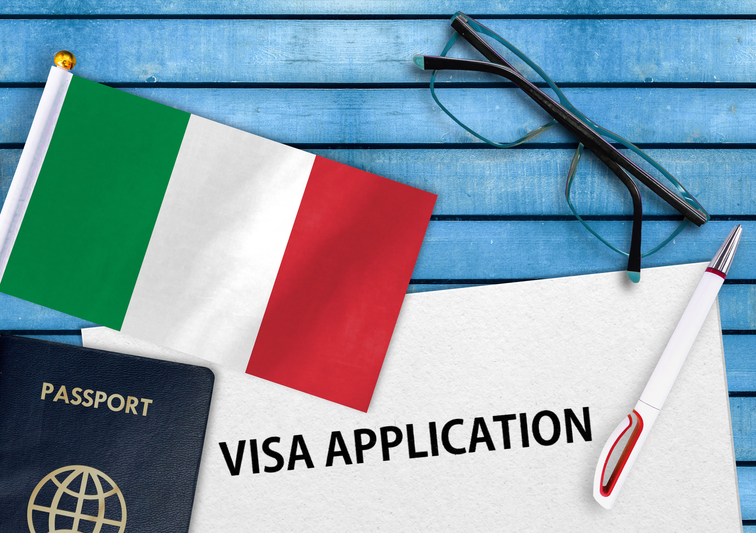
How to Apply for an Italy Digital Nomad Visa
The process is easier when you prepare each document before your appointment and follow the instructions for your consular district.
Check Your Consular Jurisdiction
Use the Italian Embassy’s U.S. consular network to find the office that serves your state or county. Do this before gathering documents, since each consulate may publish its own checklist and appointment instructions.
Complete the Application Form
For stays longer than 90 days, applicants generally use the national visa application. Review the Visa for Italy portal and your consulate’s website to confirm the correct form. Complete every section carefully; missing or inconsistent information can delay the application.
Prepare Your Documents
Build your application packet using the consulate’s exact checklist. Keep originals and copies where required, and check whether qualifications or official documents need an apostille, legalization, or Italian translation. Do not rely on a generic online checklist when your consulate publishes more specific instructions.
Book and Attend Your Visa Appointment
Many Italian consulates use the official Prenot@Mi booking system. Bring the complete application packet and be prepared to provide biometric data if required. Processing times vary by category and consulate; current official guidance warns that self-employed digital nomad applications can take up to 120 days.
Apply for Your Residence Permit After Arrival
If you enter Italy on a national visa, you must apply for a permesso di soggiorno (residence permit) at the local Questura within eight working days of arrival. The permit is generally issued for up to one year and can be renewed if you continue to meet the relevant work, accommodation, and insurance conditions.
What Is the Minimum Income for an Italy Digital Nomad Visa?
Italy does not set the requirement as a fixed monthly salary. The law ties it to a statutory health-care contribution threshold. The current Italian embassy guidance places the minimum at roughly €25,500 to €27,000 per year, or about €2,125 to €2,250 per month. This is an income requirement, not a €30,000 savings requirement. Because consulates currently publish slightly different calculations, use the amount stated by the office handling your application.

Who Is Eligible for an Italy Digital Nomad Visa?
The visa is designed for non-EU professionals who can perform highly qualified work remotely. In practice, you should be able to show all of the following:
- Non-EU Citizenship. The visa is intended for applicants who do not already have EU free-movement rights.
- Highly Qualified Work. You must meet Italy’s qualification rules through an eligible degree, professional credential, or the required level of documented experience.
- Remote Work. Your work must be performed remotely using digital tools. Digital nomads are self-employed; remote workers are employees or collaborators.
- Relevant Professional Experience. You need at least six months of previous experience in the field you plan to continue from Italy.
- Income, Insurance, and Accommodation. You must meet the income threshold, hold valid medical insurance for the stay, and show suitable housing in Italy.

Other European Countries With Digital Nomad Visas
If Italy’s requirements do not fit your situation, several other European destinations have dedicated digital nomad or remote-work residence routes. Spain, Portugal, Croatia, Estonia, Greece, and Malta are common alternatives. Each program has its own income, insurance, tax, and documentation rules, so compare official immigration guidance before choosing a destination.
Before You Move to Italy
Italy’s digital nomad route gives qualified non-EU professionals a legal way to live in the country while working remotely. The key is getting the details right: your qualifications, income, insurance, accommodation, and consular documents all matter. Before applying, use the checklist published by the Italian consulate responsible for your U.S. residence as your final source.
Once the visa paperwork is in place, you can focus on the practical side of the move. With Heymondo, you can confidently travel and live as a digital nomad, knowing you have reliable coverage in unforeseen circumstances. Don’t leave your adventure to chance – choose Heymondo travel insurance for comprehensive coverage and peace of mind throughout your journey.
Featured stories