Last Updated: August, 2026
Planning a babymoon or keeping up with your travel plans while expecting is entirely possible with the right preparation. Because your physical comfort, medical risks, and airline rules change as your pregnancy progresses, we organized this guide by trimester. We want to anticipate your doubts and give you exactly what you need to plan ahead.
Index
First Trimester (Weeks 1–13): Managing Symptoms And Early Risks
During your first trimester, physical symptoms like morning sickness and deep fatigue are your main hurdles. Travel is generally safe during a normal pregnancy, but the risk of miscarriage is highest in these early weeks.
According to the American College of Obstetricians and Gynecologists (ACOG), early travel is generally safe for an uncomplicated pregnancy, though symptoms like morning sickness and fatigue are most intense. Major health institutions, including the UK’s NHS, note that the risk of miscarriage is highest during these first 12 weeks, making short and flexible trips preferable.

Second Trimester (Weeks 14–28): The Optimal Travel Window
The American College of Obstetricians and Gynecologists (ACOG) and the CDC agree that the second trimester is the safest and most comfortable time to travel. By week 14, morning sickness usually fades, your energy returns, and the risk of early labor drops significantly.
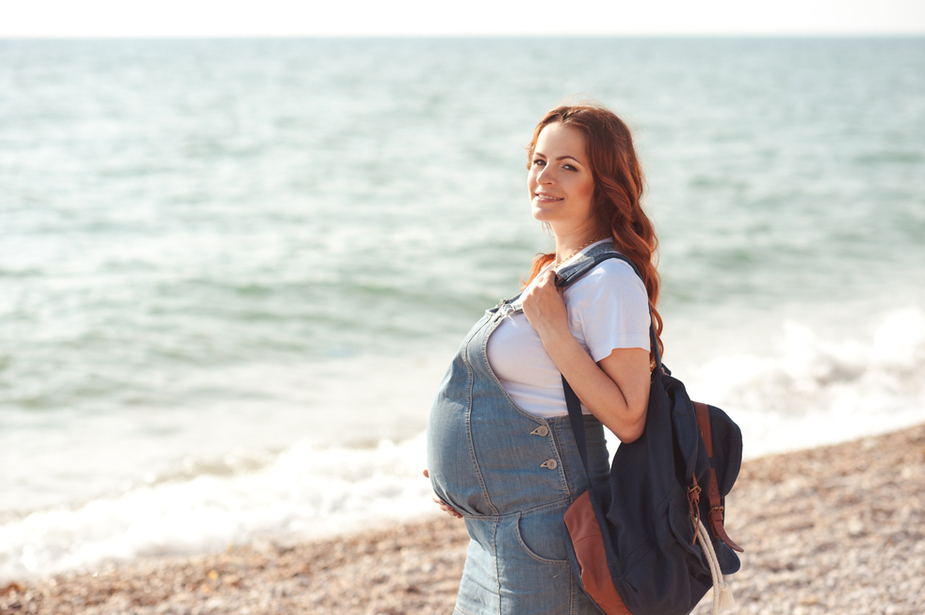
This is the perfect time for an international babymoon or a longer flight. If your trip includes swimming or snorkeling, these activities are safe during a healthy pregnancy. Just make sure you do not push yourself too hard.
Third Trimester (Weeks 29–40): Airline Cutoffs And Staying Local
As you enter your third trimester, the chance of sudden medical complications goes up. Clinical guidance from institutions such as Johns Hopkins Medicine
advises staying within a 300-mile radius of home during the third trimester. This minimizes risks associated with sudden complications like high blood pressure, preterm labor, or unexpected delivery far from your primary medical team.
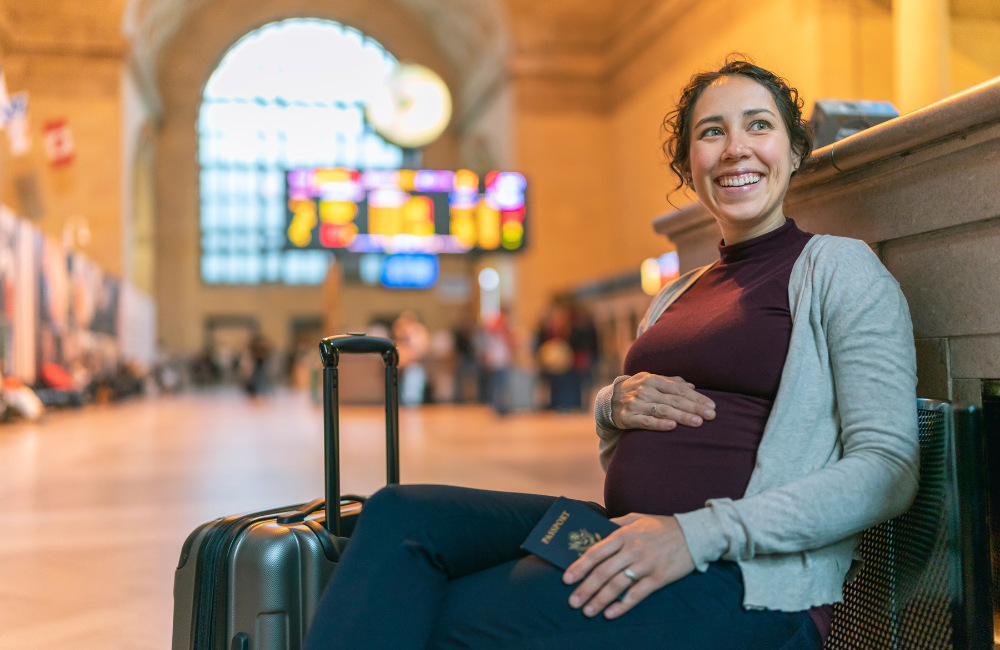
If you must fly, you will face strict airline rules. Most major carriers have a firm cutoff for domestic flights at 36 weeks for a single pregnancy. For long international flights, airlines often require a formal medical certificate from your doctor starting at week 28. They might even prohibit travel completely after 32 to 34 weeks.
Essential Health And Comfort Tips For Travel
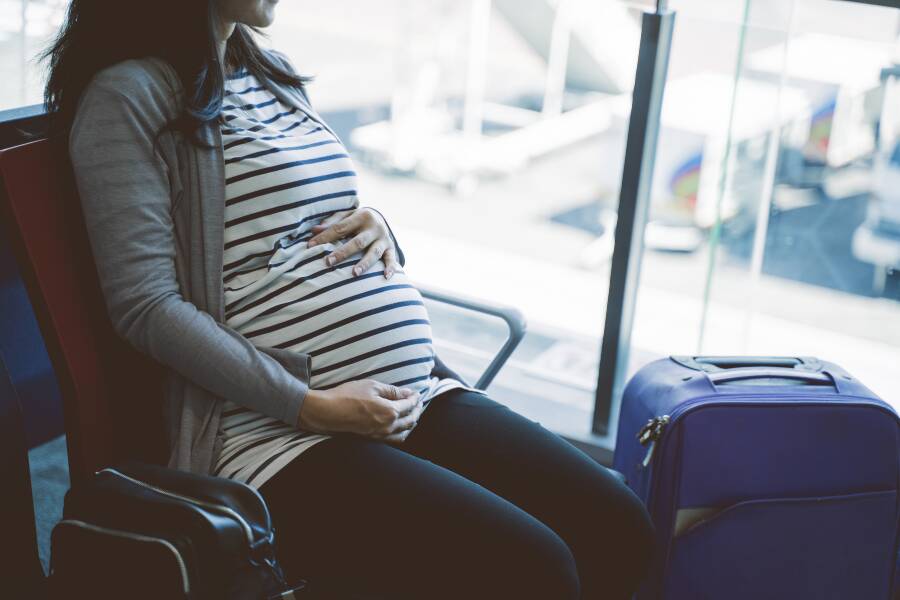
Keeping your blood flowing and staying comfortable are top priorities when you travel.
- Drink plenty of caffeine-free fluids, like bottled water, to stay hydrated in dry airplane cabins.
- Walk and stretch your legs every half hour during a smooth flight.
- Flex your ankles often to prevent blood clots.
- Wear loose clothing and compression socks to support healthy circulation.
- Place your seat belt at the pelvis level, fastening it securely below your hips instead of across your belly.
- Avoid traveling to places with high altitudes, active malaria, or outbreaks of food-borne and insect-borne infections, such as areas with active Zika virus transmission.
Navigating International Healthcare And Preparation
The CDC advises all pregnant travelers to find medical facilities at their destination that can handle pregnancy complications or early delivery. Many domestic health insurance policies do not cover medical treatment outside the United States, so securing the right protection is essential.
What We See In Claims
Standard travel policies do not cover routine prenatal visits or standard childbirth abroad. However, they do help when the unexpected happens.
Our team has handled claims where an expecting mother must cancel her trip because her doctor mandated sudden bed rest due to a pregnancy complication. As long as the complication starts after you buy the insurance, this type of unforeseen medical cancellation is covered. Always buy your coverage within seven days of booking your trip so your cancellation benefits apply.

Your babymoon should focus on relaxing and disconnecting from your daily routine. We know that planning a trip while expecting brings unique questions, but our team is here to anticipate your doubts and help you navigate them. Leave the unexpected travel details to us so you can experience true peace of mind during your vacation. Pack your bags, prioritize your comfort, and enjoy your adventure.
Featured stories