Last Update: August 2026
Spain works especially well for a backpacking trip because its major cities, coastal regions, islands, and hiking areas are connected by a strong rail and bus network. You can build an itinerary around art and nightlife, beaches and food, or mountain routes without needing to rent a car for the entire trip.
This guide covers how much to budget, ways to save money, entry requirements for U.S. travelers, the best places to add to your route, and the most practical ways to travel around the country.
Index
How Much Does It Cost to Backpack in Spain?
Spain is moderately priced by Western European standards, but Madrid, Barcelona, San Sebastián, and the islands can become expensive during peak season. Your budget will depend on how early you book, where you travel, and how often you pay for major attractions.
| Travel Style | Planning Budget | What It Typically Covers |
| Budget backpacker | About €60-80 per day | Hostel dorm, groceries or simple meals, public transit, and mostly free or low-cost sightseeing. |
| Comfortable backpacker | About €100-140 per day | Better-located hostel or occasional private room, restaurant meals, intercity transport, and several paid attractions. |
| Mid-range traveler | About €150-200+ per day | Private accommodation, regular restaurant meals, high-speed trains, paid attractions, and occasional taxis. |
Treat these as planning ranges rather than fixed prices. Barcelona and San Sebastián can be significantly more expensive in summer, while smaller inland cities and shoulder-season trips can cost less. Spain uses the euro (€), so there is no need to convert every price into U.S. dollars inside the itinerary; exchange rates change too quickly.
Money-Saving Tips for Spain
Without the right planning and guidance, you can end up spending too much money. However, some creativity and the right information can help you have the best trip without breaking the bank. Here are some money-saving tips for Spain:
- Choose the menú del día at lunch. Many Spanish restaurants have affordable “menu of the day” options, especially during lunch. These options go for around 12 to 17 EUR.
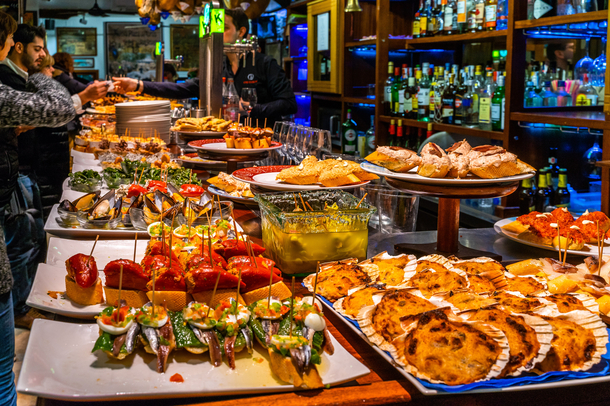
- Eat free tapas. Some Spanish cities, like Granada, have bars that offer free tapas with every drink order. So, if you are looking for free meals, you can bounce around bars while enjoying a few drinks.
- Get a local host. Instead of spending money on accommodation, you can opt for a local host. Staying with a local is also a great way to get more insight into the destinations and the best places to visit.
- Use public transportation inside cities. Metro, bus, tram, and local rail are usually more useful for a backpacking budget than repeated taxi rides. A tourist pass is only good value if it matches the trips you will actually make.
- Use a BlaBlaCar. This is a long-distance carpooling and ridesharing app that connects traveling car owners and people looking for rides in the same direction.
- Bring a water bottle. Tap water in Spain is safe to drink. So, instead of spending money on water, you can bring a reusable bottle. This tip will also help you reduce plastic use and conserve the environment.
Entry Requirements for U.S. Travelers
U.S. citizens can visit Spain and the rest of the Schengen Area for tourism for up to 90 days in any 180-day period without a short-stay visa. The 90 days are counted across the Schengen Area as a whole, not separately for Spain.
The EU Entry/Exit System (EES) is already in operation for short-stay non-EU travelers and electronically records entry and exit data. You can review how it works on the official EES website.
ETIAS is not yet required as of August 2026. The European Union says it will begin in the last quarter of 2026, with a €20 application fee once the system launches. Check the official ETIAS information close to your departure date because the exact launch date has not yet been announced.
Travel Tip: If your backpacking route continues into France, Portugal, Italy, or another Schengen country, those days count toward the same 90-in-180-day limit. Longer stays, study, and work follow different rules.
Best Places to Visit While Backpacking in Spain
Backpacking is a fantastic activity to do in Spain because of the many incredible things you will get to see. If you decide that it is time to visit Spain, below is a list of things you can see and big cities you can visit as a backpacker in Spain:
Madrid
Madrid is a strong starting point for art, nightlife, parks, food markets, and easy rail connections across the country. The Prado, Reina Sofía, Thyssen-Bornemisza, Royal Palace, Plaza Mayor, Retiro Park, and neighborhoods such as La Latina and Malasaña can fill several days without complicated logistics.
Retiro Park forms part of the UNESCO-listed Paseo del Prado and Buen Retiro cultural landscape. For backpackers, Madrid also works well because many central sights are walkable and the city’s museums offer reduced or free-entry windows.
If you are traveling on a budget, balance paid museums with parks, neighborhoods, markets, and walking routes. Madrid’s metro also makes it unnecessary to stay directly beside the major attractions. Check current admission and visitor information on the official Prado Museum website
Barcelona
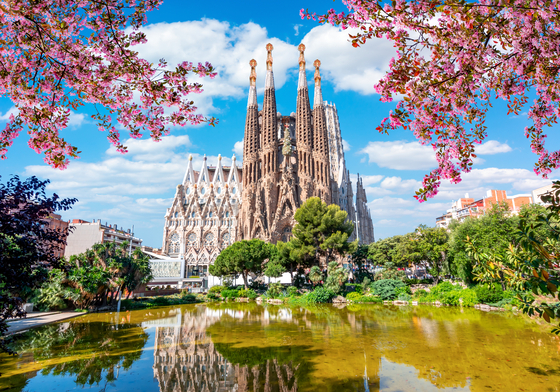
Barcelona combines architecture, beaches, nightlife, food, and neighborhoods that are easy to explore on foot or by public transportation.
The Sagrada Família remains one of the city’s major landmarks, but it is worth reserving directly through the basilica rather than relying on unofficial ticket sellers. At the time of this August 2026 update, its official ticket page is showing a temporary closure to the public, so verify current access before building your itinerary around a visit. Check current Sagrada Família tickets and visitor information here.
Elsewhere, you can explore the Gothic Quarter, Passeig de Gràcia, Park Güell, local markets, and Barcelona’s waterfront. Accommodation tends to become more expensive during summer and major events, so booking early can make a significant difference to a backpacking budget.
Córdoba
Córdoba is compact enough for one or two nights, with the Mosque-Cathedral, the Roman Bridge, the Jewish Quarter, and the Alcázar among its main sights. The city’s famous Patios Festival took place from May 4 to 17 in 2026, and the official program confirms that the competition patios were free to visit. See the Patios de Córdoba website for future dates.
The city can also work well as a stop between Madrid and Seville rather than a separate long stay.
Seville
Seville is one of the best stops in Spain for architecture, food, and Andalusian culture. The Real Alcázar, Seville Cathedral and the Giralda, Plaza de España, Triana, and the Santa Cruz neighborhood can comfortably fill several days.
If you want to visit the Real Alcázar, buy through the official website and consider reserving ahead, particularly during busy travel periods. Check current Real Alcázar tickets and visitor information.
Seville also works well as a transportation base for continuing to Córdoba, Cádiz, Granada, or Málaga. Spring attracts especially large numbers of visitors around Semana Santa and the Feria de Abril, so accommodation requires more advance planning during major festivals.
Málaga
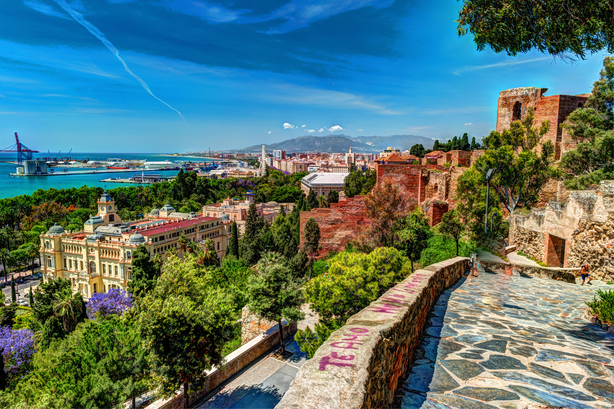
Málaga is a better destination than the old stereotype of a city used only as an airport gateway to the Costa del Sol.
You can combine beaches with the Alcazaba, the Roman Theater, the historic center, museums, and the city’s Picasso connections. Spain’s official tourism site highlights Málaga’s 16 beaches as well as its expanding cultural and museum scene.
Málaga is also a useful base for a day trip to Caminito del Rey, but the trail is not in Málaga city itself. It is in the province of Málaga, less than 60 kilometers from the capital. Access requires advance reservation through the official system. General admission is currently €10, about $12, while the official guided visit costs €18, about $21. Reserve through the official Caminito del Rey website.
Granada
Granada is one of the best-value cultural stops in southern Spain, but the Alhambra requires planning. The official Alhambra General ticket currently costs €22.27 and includes the Nasrid Palaces, Alcazaba, Partal, and Generalife. The Nasrid Palaces have a specific timed entry.
The Alhambra is a palace-city developed by the Nasrid dynasty and later adapted after the Christian conquest. Outside the monument, Granada’s Albaicín, viewpoints, tapas bars, and student atmosphere make it easy to fill two or three days.
Valencia
Valencia offers an appealing middle ground for travelers who want a large Spanish city without following exactly the same Madrid–Barcelona itinerary.
You can walk or bike through the Turia Gardens, visit the City of Arts and Sciences, explore the historic center, and spend time at the beach. The City of Arts and Sciences complex includes the Science Museum, Hemisfèric, Oceanogràfic, and other cultural and entertainment spaces. See current information from Valencia’s official tourism website.
Valencia also has direct rail connections with Madrid and Barcelona, making it easy to include in a longer backpacking route.
Galicia
Galicia is not a city but an entire region in northwestern Spain, and it offers a very different experience from Madrid, Barcelona, or Mediterranean Spain.
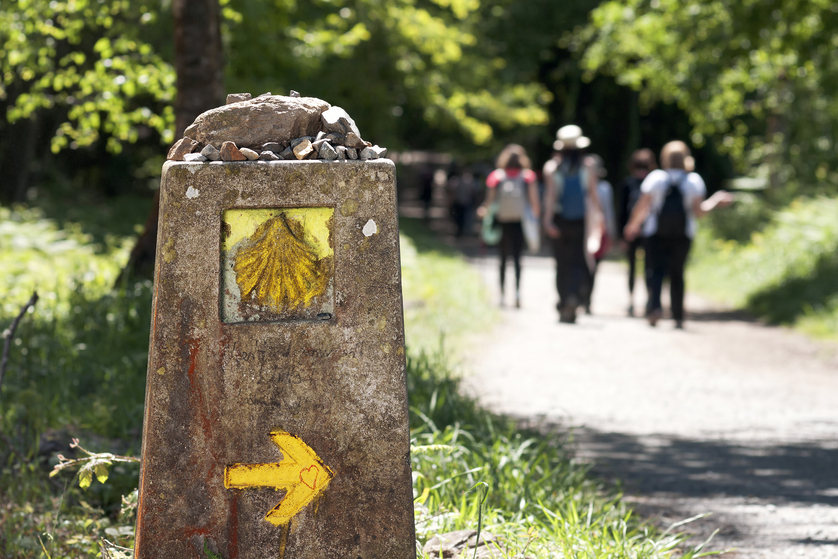
Santiago de Compostela is the best-known destination, but Galicia also has coastal towns, beaches, seafood, forests, and walking routes. Travelers interested in hiking can incorporate part of the Camino de Santiago into their trip rather than treating Galicia only as a city break.
The Xunta de Galicia maintains an official Camino de Santiago planning website with routes, public pilgrim hostels, preparation advice, and practical information.
San Sebastián
San Sebastián, or Donostia, is an excellent northern stop for travelers interested in food, beaches, and the Basque Country.
La Concha Bay is the city’s most recognizable setting, while the Old Town is known for its pintxos bars. You can also head toward Monte Igueldo for elevated views of the coast.
Unlike the old assumption that San Sebastián is an inexpensive backpacking destination, it is sensible to plan a higher accommodation and food budget here than in many smaller Spanish cities. Backpackers can control costs by staying outside the most central areas, mixing restaurant meals with supermarket food, and booking beds well ahead in summer.
Spain’s Islands
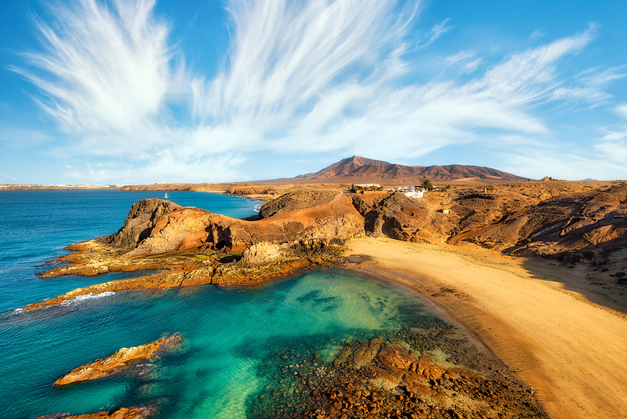
There are over 170 Spanish islands, including Santa Clara, Ibiza, Isa de Izaro, Garraitz, and Isla de Aquech. Instead of trying to count every Spanish island, focus on the two main archipelagos: the Balearic Islands in the Mediterranean and the Canary Islands in the Atlantic.
- Balearic Islands: Mallorca, Menorca, Ibiza, and Formentera combine beaches, villages, nightlife, hiking, and seasonal ferry connections. Read the official Balearic Islands guide before building an island-hopping route.
- Canary Islands: Tenerife, Gran Canaria, Lanzarote, Fuerteventura, La Palma, La Gomera, and El Hierro offer volcanic landscapes, year-round mild weather, and strong hiking options. The official Canary Islands guide is useful for choosing the island that fits your trip.
Travel Tip: Flights between mainland Spain and the islands can be inexpensive when booked early, but summer and holiday periods can be costly. Do not assume islands are automatically quieter or cheaper than mainland cities.
What Is the Best Way to Travel Around Spain?
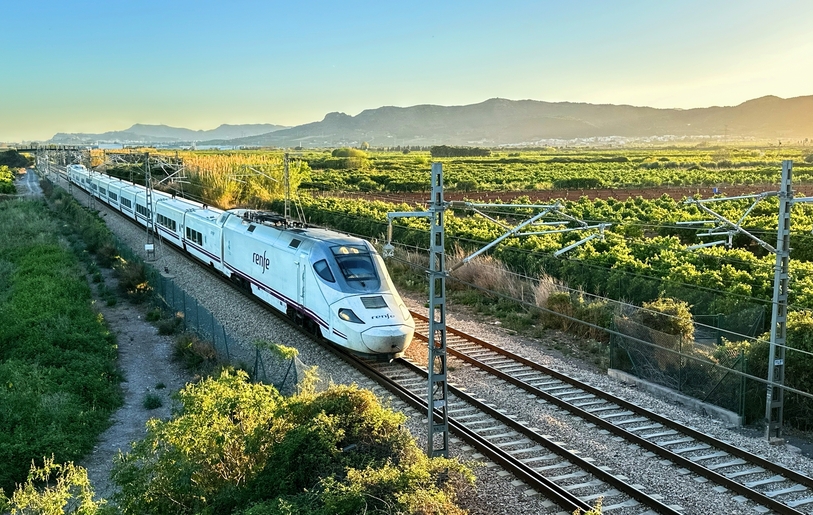
For a mainland backpacking route, the fastest option is not automatically a domestic flight. High-speed rail connects many major city pairs from center to center and often avoids airport transfers and security time.
Use Renfe to check trains like AVE, Avlo, Alvia, Intercity, Euromed, and regional services. Prices vary by route, date, and ticket type, so booking early can make a large difference.
- High-speed train: Best for many routes between Madrid, Barcelona, Valencia, Seville, Málaga, Córdoba, Granada, Zaragoza, and other major cities.
- Bus: Useful for smaller cities and regional routes that do not have convenient rail connections. Long-distance buses can be cheaper, but they take more time.
- Car sharing: Services such as BlaBlaCar can be useful for routes with weak public transportation. Check pickup locations, driver reviews, and cancellation conditions before relying on a ride.
- Flights: Most useful for the Canary Islands, Balearic Islands, or very long cross-country routes when the schedule beats the train.
Build a Backpacking Route That Fits Your Pace
A good Spain backpacking trip is easier when you choose a region or transport corridor instead of trying to collect every famous city. For 10 to 14 days, Madrid plus two or three stops in Andalusia works well, as does a Barcelona-Valencia-Madrid route. With three weeks, you can add northern Spain, Galicia, or an island stay without turning every other day into a transfer.
Even when it is optional, travel insurance may be useful during a backpacking trip if you want protection for eligible medical expenses, trip interruptions, or lost or stolen belongings.
Featured stories