Last Update: August 2026
Between Java and Lombok, Bali packs an extraordinary amount into a relatively small island. It stretches roughly 87 miles east to west and 56 miles north to south. Volcanoes rise above terraced rice fields, while jungle waterfalls hide inland. Surf breaks line a coast dotted with temples and seaside villages.
What makes Bali memorable, though, is how closely culture shapes everyday life. Hindu temples, or pura, appear beside rice fields, on cliffs, and in the middle of busy towns. Daily offerings, ceremonies, art, and dance shape the island’s distinctive character. Even a simple neighborhood walk gives you a sense of place.
A trip here can be as active or as slow as you want it to be. You might hike a volcano before sunrise or spend the afternoon at a beach. Later, explore a temple at sunset or linger over coffee in Ubud. This guide covers the places, practical details, and planning tips you need for a first trip to Bali.
Index
Must-See Places in Bali
Bali is small enough to explore on one trip, but each region has a very different feel. Southern Bali is the busiest, with surf beaches, beach clubs, restaurants, and the cliff-top Uluwatu Temple. Central Bali feels greener and more cultural. The north and east reward travelers who are happy to spend more time on the road.
Ubud makes a natural base for a first visit. Rice fields, temples, craft villages, and jungle walks surround the town. Many of central Bali’s best-known sights are also within day-trip distance. Farther west, the Jatiluwih rice terraces form part of Bali’s UNESCO-listed cultural landscape. UNESCO recognizes the traditional subak irrigation system and the philosophy behind it.
Northern Bali feels noticeably quieter than the resort-heavy south. Around Lovina, Munduk, and the Buleleng region, you’ll find black-sand beaches, waterfalls, mountain roads, and cooler highland scenery. In the northwest, Pemuteran is a useful base for snorkeling or diving around Menjangan Island and West Bali National Park.
Eastern Bali combines some of the island’s most important temples with volcanic scenery and excellent diving. Mount Agung dominates the skyline, while the coast around Amed and Tulamben is known for reefs and the USAT Liberty wreck.
If it’s your first time on the island, the places below are a good starting point. Grouping them by region will help you spend less time in traffic and more time actually exploring.
What to See in Central Bali?
Ubud, the Heart of Bali
Ubud became internationally famous long before social media, and its popularity only grew after Eat, Pray, Love. Many travelers now use Ubud as a base for central Bali. It also attracts people who stay for weeks rather than days. I spent two months living in Ubud. What stayed with me most was how naturally daily life, art, temples, and nature overlap here.
Central Ubud is busy with cafés, restaurants, galleries, shops, and small temples. For souvenirs and local crafts, stop by Ubud Market near the Royal Palace. Then leave time to wander beyond the main streets, where the pace quickly becomes calmer.
Ubud is also a practical starting point for day trips. Hiring a private driver often makes day trips easier. This is especially true if you want to combine temples, rice terraces, and waterfalls on one route.
You don’t have to leave town to find greenery. The Campuhan Ridge Walk runs for roughly 1.2 miles (2 km) through rolling hills outside central Ubud. The Sweet Orange Walk Trail winds between rice fields and small cafés. Penestanan is another good area for a quieter walk away from the busiest streets.
Other must-see spots in Ubud:
Monkey Forest, a Sacred Nature Reserve
The Sacred Monkey Forest Sanctuary combines a protected forest, temple complex, and a large population of Balinese long-tailed macaques. It sits within walking distance of central Ubud and includes sacred sites such as Pura Dalem Agung Padangtegal.
The macaques are used to visitors and can be quick to grab loose belongings. Keep sunglasses, food, water bottles, and other easy-to-snatch items secured rather than carrying them in your hands.
Ubud Royal Palace, Ubud’s Cultural Treasure
Also known as Puri Saren Agung, Ubud Royal Palace remains one of the easiest places to see traditional Balinese architecture in the center of town. Its courtyards and carved gateways make it a worthwhile stop, especially when combined with the market and nearby temples.
Traditional Balinese dance performances take place at venues around central Ubud, including the palace area. Schedules vary, so check what is on during your stay rather than planning around a fixed nightly program.
Pura Taman Saraswati, a Spiritual Haven in Ubud
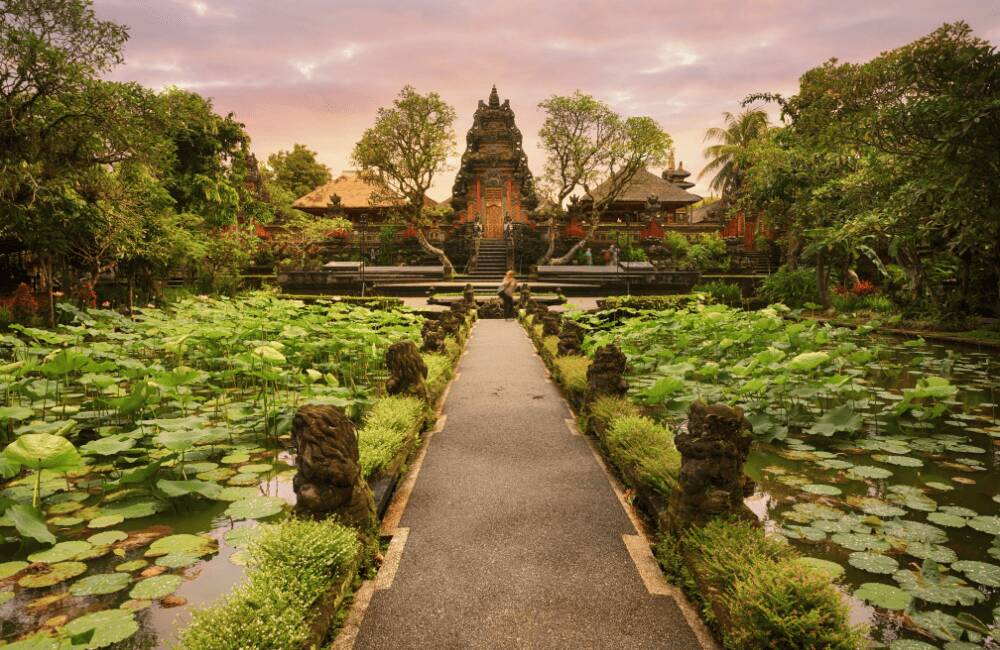
A short walk from the Royal Palace, Pura Taman Saraswati is known for the lotus ponds leading toward its ornate entrance. The temple is dedicated to Saraswati, the Hindu goddess associated with knowledge, music, and the arts.
Tegallalang Rice Terraces, Ubud’s Photogenic Rice Fields
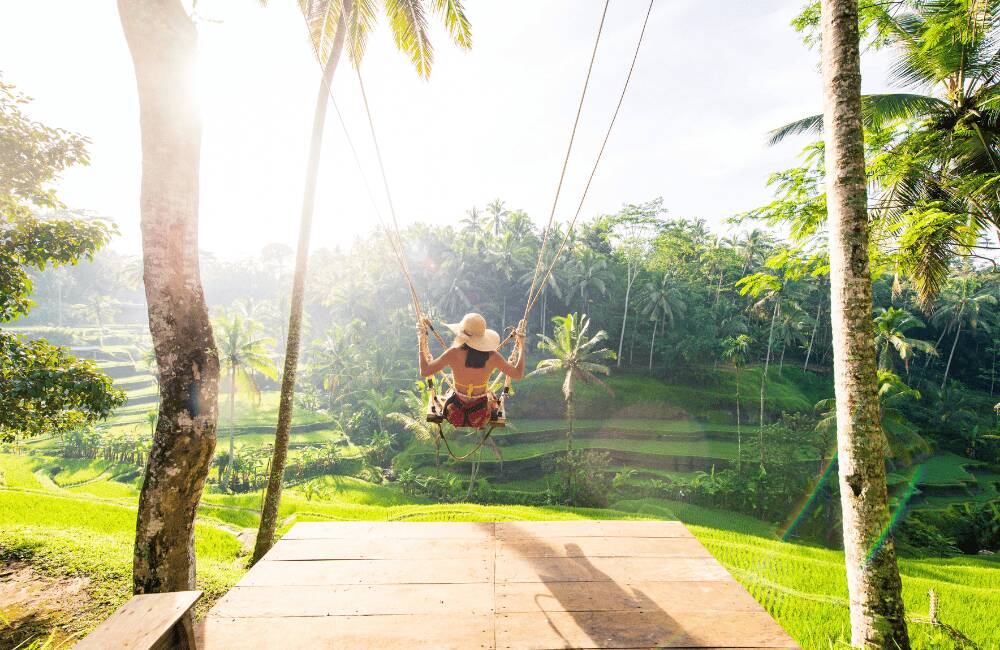
A short drive north of Ubud, the Tegallalang rice terraces cascade down a steep valley in one of Bali’s most recognizable landscapes. The area is now highly developed for visitors, with viewpoints, cafés, walking paths, and swings overlooking the fields.
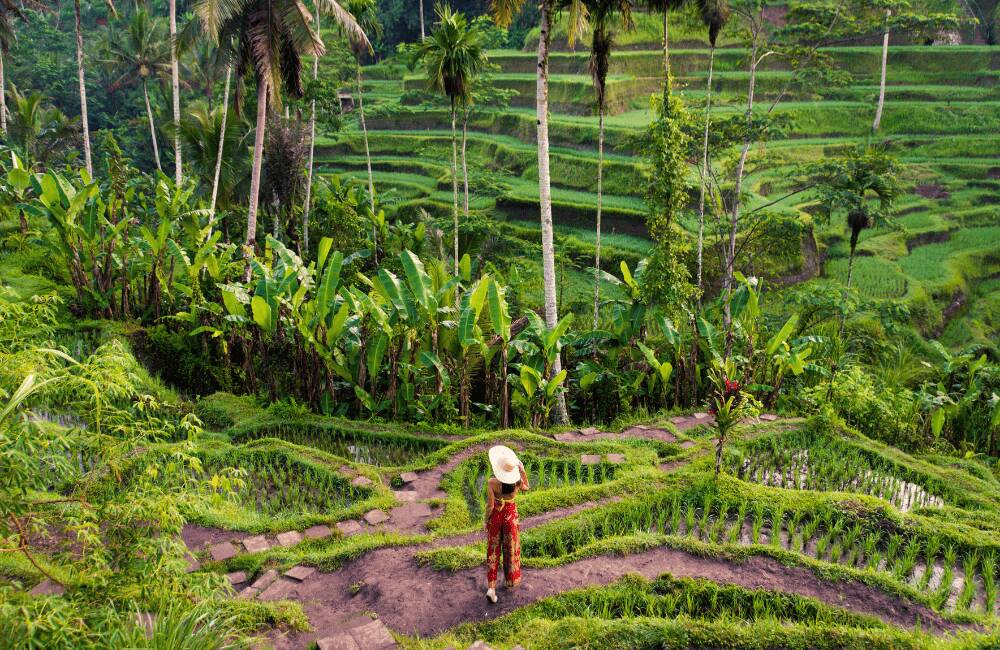
The terraces are shaped by the land and supported by Bali’s traditional subak irrigation system, which distributes water through a cooperative network of channels and weirs.
For the best experience, arrive early and walk beyond the first viewpoints. The most photographed sections get busy quickly, while the paths lower in the valley can feel much calmer.
Jatiluwih Rice Terraces, Bali’s Landscape at Its Best
Farther north, you’ll find some of Bali’s most impressive rice terraces. The UNESCO World Heritage listing dates to 2012. These vast terraces sit in Tabanan, one of Bali’s nine regencies.
Several walking routes cross the terraces, so you can make the visit as short or as active as you like. If you have time, slow down here. The landscape changes as you move away from the roadside viewpoints.
The fields change throughout the rice-growing cycle, so they are not uniformly bright green year-round. During the wetter months the surrounding landscape is especially lush, while the drier season generally brings easier walking conditions.
Pura Ulun Danu Bratan
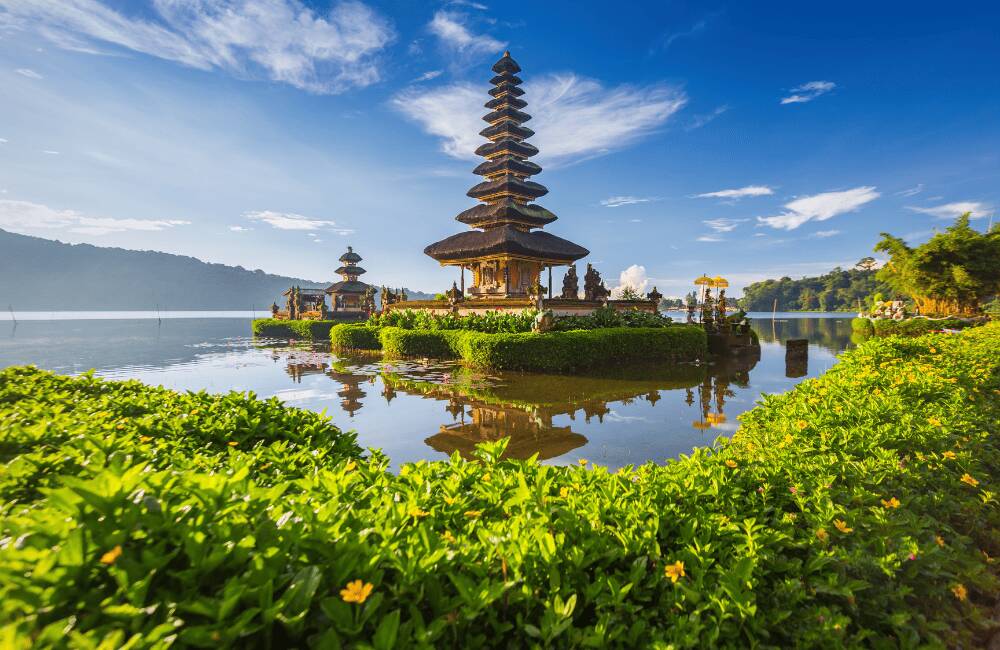
Continue north and you’ll reach Pura Ulun Danu Bratan before the coast. The temple honors Dewi Danu, the goddess of water. From certain angles, it appears to float on Lake Bratan against a mountain backdrop. It’s a striking sight that you can also admire from a boat on the lake.
The complex includes several shrines and five temples dedicated to different deities. Together, they reflect the Balinese people’s close relationship with nature, especially water.
Pura Tirta Empul, the Temple of Purifying Springs
Near Tampaksiring, Tirta Empul is one of Bali’s best-known water temples. Its sacred spring feeds purification pools used for the melukat ritual. Visitors can observe the complex respectfully, and those who want to take part should follow the temple’s instructions rather than treating the pools as a regular swimming area.
In addition to these well-known temples, there are many others in central Bali, less frequently visited but well worth exploring:
Pura Gunung Kawi, the Temple of Kings
Gunung Kawi sits in the Pakerisan River valley. This 11th-century archaeological complex features monumental shrines carved directly into the rock. Reaching the site means descending hundreds of steps through a green river valley, so comfortable shoes are a good idea.
The rock-cut candi are generally understood as memorial shrines connected with Bali’s Warmadewa royal dynasty rather than conventional tombs. Their scale and setting make Gunung Kawi one of the most distinctive historical sites near Ubud.
Gunung Kawi and Tirta Empul are close enough to combine in the same half-day trip, especially if you are already exploring the Tampaksiring area.
Pura Goa Gajah, the Elephant Cave
Goa Gajah, or the Elephant Cave, is an archaeological complex near Bedulu, southeast of Ubud. The site dates back roughly to the 9th century and is best known for the dramatic carved entrance to its cave, along with bathing pools, gardens, and religious remains.
The wider complex reflects both Hindu and Buddhist influences, which makes it more interesting than the cave entrance alone. Give yourself time to walk through the lower gardens rather than stopping only for a photo.
It is only a short drive from central Ubud, so it works well as part of a route that also includes nearby temples or craft villages.
Penglipuran, a Traditional Balinese Village
Penglipuran sits in the Bangli highlands at roughly 2,300 feet (700 m) above sea level. Visitors come for its preserved village layout, traditional compounds, and bamboo surroundings. It is a popular visitor destination, but it remains a living community. Treat homes and ceremonial spaces with the same respect you would any residential area.
What to See in Northern Bali?
Brahmavihara-Arama, a Peaceful Buddhist Monastery
Near Banjar in northern Bali, Brahmavihara-Arama is the island’s largest Buddhist monastery. Its hillside setting, meditation spaces, gardens, and quieter atmosphere make it an interesting contrast to Bali’s Hindu temple complexes.
Goa Lawah Temple, the Bat Temple
Goa Lawah, whose name means “Bat Cave,” is an important temple complex built around the entrance to a cave inhabited by large numbers of bats. Located in Klungkung Regency on Bali’s eastern side, it is a sacred site first and a visitor attraction second.
If you stop here, dress respectfully and give priority to worshipers and ceremonies. The coastal road also makes Goa Lawah easy to combine with Padang Bai or other stops in eastern Bali.
Bali Waterfalls: Freshwater Dips
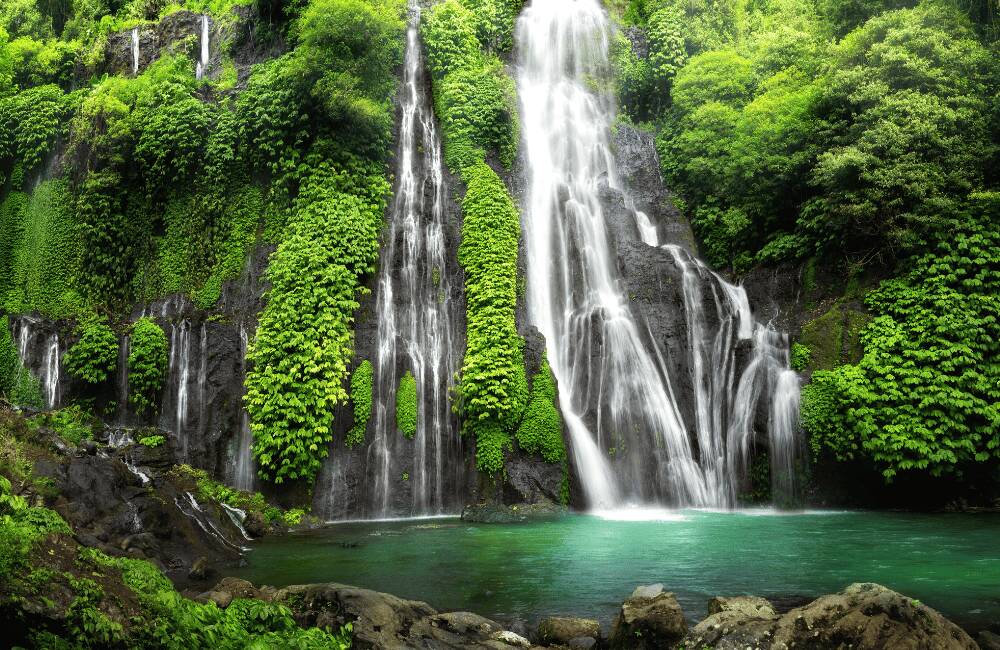
Waterfalls are one of the best reasons to spend time north of Ubud. Many require a drive followed by a short jungle walk and an entrance fee, so wear shoes with grip and expect wet, uneven steps.
Aling-Aling and Nungnung are two popular options. Nungnung involves a long staircase, but the reward is a powerful waterfall dropping more than 160 feet (50 m) into a forested ravine.
Sekumpul is a group of waterfalls surrounded by steep, lush terrain. You can see Sekumpul from viewpoints or descend toward the base on a guided trek. The route feels adventurous, but older guides often overstate its duration.
Munduk and Gitgit are easier to work into a north Bali road trip. Both areas have multiple waterfalls, and the exact walking time depends on which entrance or trail you choose.
Mount Batur, One of Bali’s Best Sunrise Hikes
Mount Batur rises to about 5,630 feet (1,717 m) inside the Kintamani caldera. It is one of Bali’s most popular sunrise hikes. The climb usually starts very early in the morning. It takes roughly two to three hours, depending on your pace and route. If you prefer not to hike before dawn, head to a viewpoint around Kintamani. You can still enjoy wide views over the volcano and Lake Batur. Check the latest visitor information from Indonesia’s official tourism site before you go.
Travel Tip: Sunrise departures can begin around 3 a.m. Temperatures near the summit feel much cooler than on the coast, so pack a light layer even if the rest of your Bali wardrobe is built for tropical weather.
What to See in Eastern Bali?
Pura Besakih, the Mother Temple
Spread across the slopes of Mount Agung at roughly 3,000 feet (900-1,000 m) above sea level, Pura Besakih is Bali’s largest and most important Hindu temple complex. Often called the Mother Temple, it is a working religious site made up of 22 temples arranged across rising terraces.
The scale of Besakih is what makes it memorable, not a single photo stop. Give yourself time to walk through the complex, observe the architecture, and remember that ceremonies can affect which areas visitors may enter.
Pura Penataran Agung Lempuyang and the Gates of Heaven
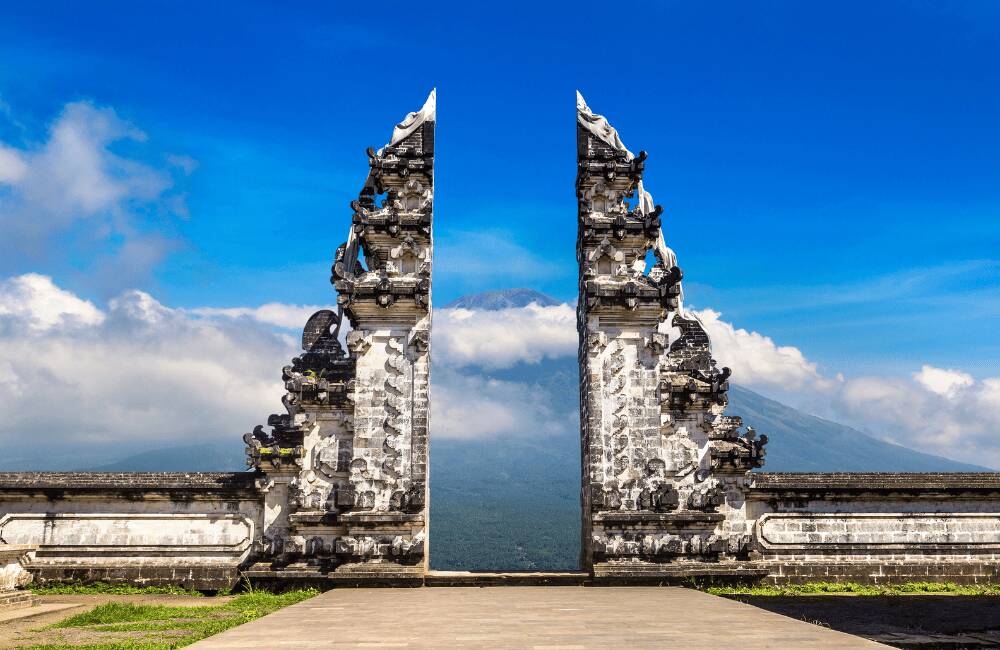
In eastern Bali, Pura Penataran Agung Lempuyang is best known for the split gate that frames Mount Agung. It forms part of the larger Lempuyang temple complex on the mountain.
The “Gates of Heaven” photo is created with a mirror effect rather than a reflecting pool. Lines can be long, so visit early if the photo matters to you, but keep in mind that this is an active place of worship, not just a social-media backdrop.
Mount Agung, the Most Sacred Mountain in Bali
Mount Agung is Bali’s highest and most sacred volcano. The Smithsonian Global Volcanism Program lists its elevation at about 9,833 feet (2,997 m) and its last known eruption in 2022. Because volcanic conditions can change, check the latest official activity information before planning any climb. See the Smithsonian volcano profile for the current eruptive history and monitoring references.
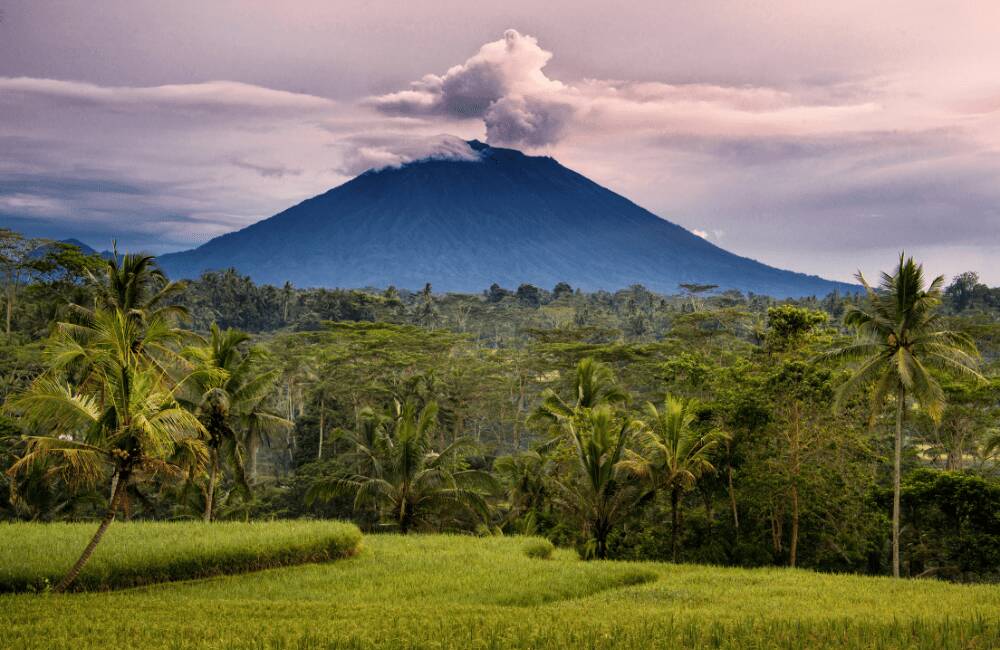
A summit climb is far more demanding than Mount Batur and should only be attempted when local conditions allow it, with an experienced guide and appropriate preparation.
Elsewhere in Bali’s highlands, volcanic landscapes have formed the lakes around Buyan and Bratan, adding a completely different side to the island’s scenery.
Tirta Gangga, the Palace of Divine Waters
“Sacred Water of the Ganges” is the translation of this water palace commissioned in 1947 by the last king of Karangasem as a place of purification and spiritual retreat. It had to be rebuilt after suffering from a volcanic eruption in 1963 and an earthquake in 1979.
The complex is famous for its gardens, fountains, and ponds filled with lotus flowers, reflecting the island’s strong connection to water.
What to See in Southern Bali?
Pura Tanah Lot, One of Bali’s Classic Sunset Spots
Tanah Lot is one of Bali’s most recognizable sea temples, set on a rock formation just off the southwest coast. At low tide you can walk closer to the base, although access to sacred areas is restricted and conditions depend on the sea.
Sunset is the classic time to visit, when the temple is silhouetted against the ocean. It is also the busiest, so arrive earlier if you want time to explore the surrounding viewpoints before the crowds build.
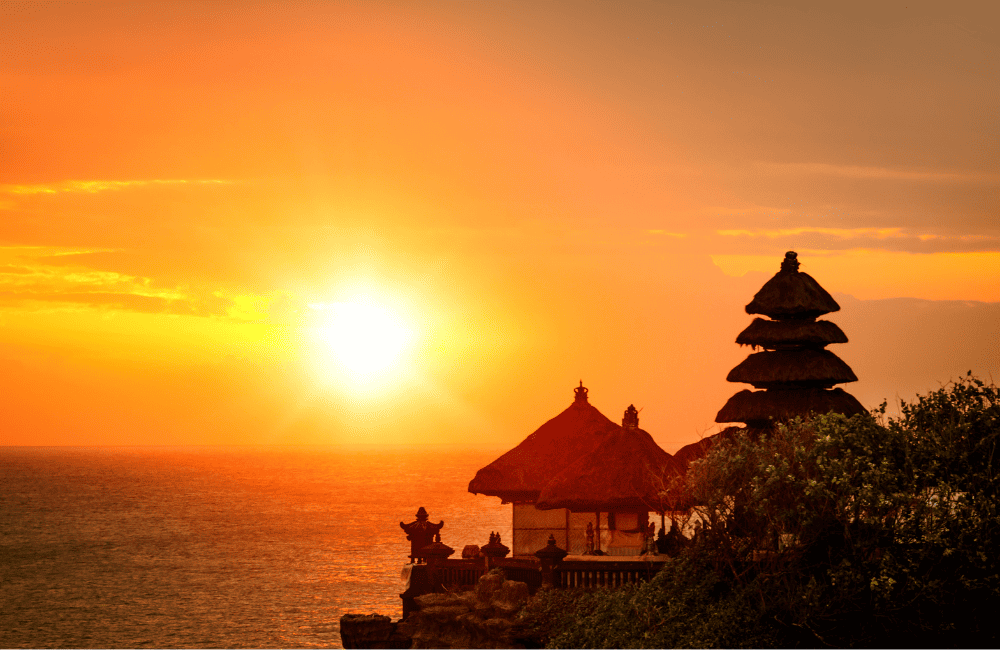
You may also hear a local legend claiming that unmarried couples who visit Tanah Lot risk breaking up afterward. Treat it as folklore rather than a travel warning – it is one of several stories that have grown around this much-photographed temple.
Pura Luhur Uluwatu, the Cliff Temple
On the Bukit Peninsula, Uluwatu Temple sits dramatically on cliffs roughly 230 feet (70 m) above the Indian Ocean. The coastal setting is as much a part of the visit as the temple itself.
Long-tailed macaques live around the temple grounds, so secure sunglasses, hats, phones, and anything else that is easy to grab.
Many visitors time their visit for late afternoon and stay for the Kecak performance around sunset. Tickets and schedules can change, so check locally before building your evening around a specific showtime.
What Are the Best Beaches in Bali?
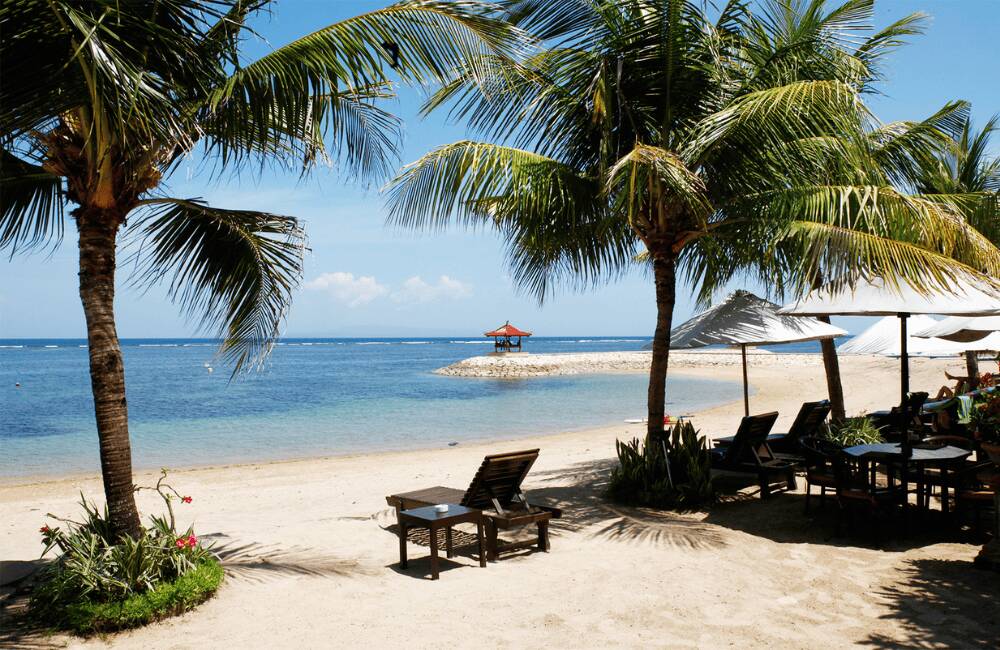
Bali’s beaches are more varied than the postcard stereotype suggests. The south is known for surf breaks, sunsets, and busy beach towns; the north and east have darker volcanic sand and a quieter feel. If your priority is bright turquoise water and small-island scenery, the Nusa and Gili islands can be a better fit than Bali’s main tourist beaches.
Jimbaran Beach, the Fishermen’s Village
Just south of I Gusti Ngurah Rai International Airport, Jimbaran is best known for its long beach and seafood restaurants that set tables directly on the sand. Come in the late afternoon, stay for sunset, and make dinner part of the experience.
Kuta Beach, Where the Fun Never Stops
Kuta is one of Bali’s busiest beach areas, with nightlife, shopping, restaurants, and a roughly 1.9-mile (3 km) stretch of sand. Its proximity to the airport makes it convenient for a first or last night, although travelers looking for a quieter introduction to Bali may prefer another base.
Canggu Beaches, a Hub for Digital Nomads
Canggu has evolved into one of Bali’s main hubs for remote workers, surfers, cafés, gyms, and nightlife. The beaches are popular for surfing, while the surrounding area attracts travelers who want a social, modern base rather than a traditional resort atmosphere.
Seminyak Beaches, Something for Everyone
South of Canggu, Seminyak mixes resorts, villas, restaurants, boutiques, and beach clubs. It is polished and busy rather than secluded. For larger resort complexes and calmer beachfront settings, Nusa Dua and Sanur offer a different style of stay.
Padang Padang Beach, a Favorite for Surfers
Padang Padang is a small, scenic beach on the Bukit Peninsula, reached by a narrow stairway between rock walls. It is an easy add-on to a day around Uluwatu.
The reef break is famous with experienced surfers, while nearby Bingin is another well-known surf spot. Swimming conditions can vary, so pay attention to local warnings and currents.
Amed Beach, Some of Bali’s Best Diving
The Amed-Tulamben coast is one of Bali’s best-known diving areas. Near Tulamben, divers can explore the USAT Liberty, a U.S. Army transport ship torpedoed during World War II that now rests just offshore and has become an artificial reef.
Lovina Beach, Dolphin Watching at Sunrise
On the northern coast, the village of Lovina has little tourist infrastructure, but its affordable prices and various charms have helped it become one of the new trendy destinations on the island. The most exciting activity in Lovina is swimming with dolphins at sunrise.
Pemuteran Beach
Northeast of Bali, surrounded by green hills, lies Pemuteran, a small village protected by West Bali National Park, which boasts one of the best underwater environments on the island. Don’t hesitate to visit the nearby island of Menjangan.
What Are the Best Islands to Visit from Bali?
Menjangan
From Pemuteran Beach, boats for excursions or diving to the nearby Menjangan Island depart daily. The translation of its name is “deer,” referring to the animals you can see on one of its beaches. At one end of the island stands Bali’s oldest temple, built in the 14th century and dedicated to the god Ganesh.
Gili Islands
About 62 miles (100 km) east of Bali, the three Gili Islands sit just off Lombok and are often added to a Bali itinerary. They are known for clear water, snorkeling, diving, and a car-free pace that feels very different from the traffic of southern Bali.
Fast boats operate from Bali to the Gilis, with Padang Bai one of the main departure points. Crossing times and sea conditions vary, so allow extra time around transfers and avoid booking a tight flight connection after a boat journey.
Each of the Gili Islands has its own characteristics, attracting different styles of travelers:
- Gili Trawangan is the largest of the three and probably the most popular with a young crowd seeking parties. Here, you’ll find hotels of all types, bars, restaurants, and diving schools. It’s recommended to explore it by bike to see all its faces and reach the southeastern coast, the most tranquil area. At night, no one should miss the action of its market, with food stalls and warung-style restaurants where you can taste the island’s fish and seafood.
- Gili Meno, on the other hand, is the smallest of the Gili Islands and has little tourist infrastructure, making it perfect for those who just want to relax on endless golden beaches or spend hours in deep blue waters. Without a doubt, romantics should choose this island and not hesitate to walk its inner paths to see local life.
- Gili Air, located off the coast of Lombok, is the farthest of all. The “island of water” is a perfect blend of the previous two, with establishments of all types and for all budgets, but also the tranquility of its beaches and less crowded corners.
Nusa Islands
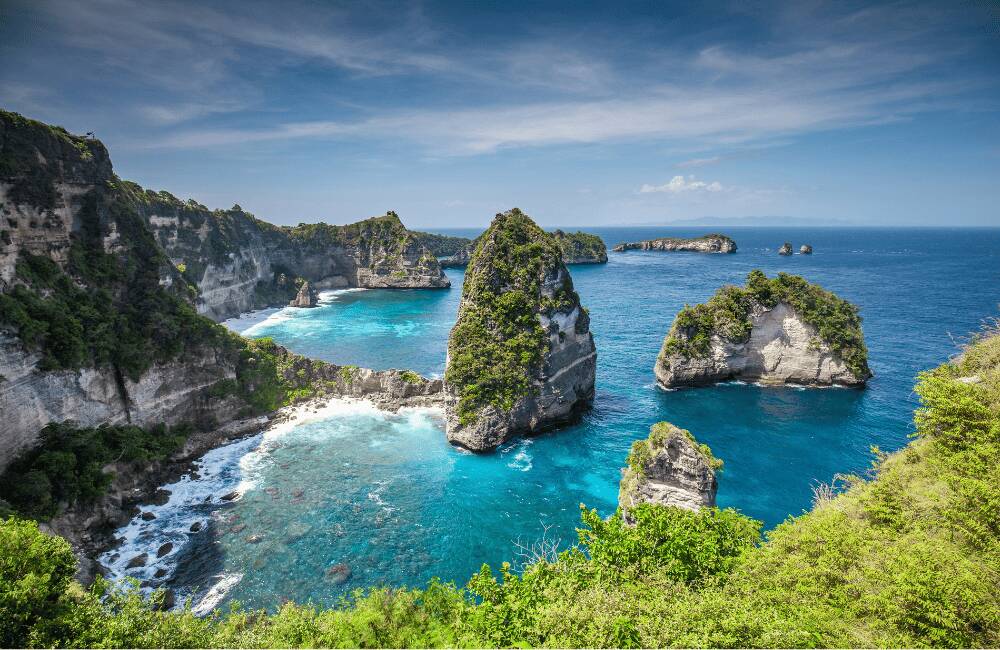
Southeast of Bali, Nusa Penida, Nusa Lembongan, and Nusa Ceningan are reached by fast boat and offer dramatic cliffs, beaches, snorkeling, and diving. Travel time is usually under an hour from the Sanur area, but schedules depend on sea conditions.
- Nusa Penida has become quite popular in recent years thanks to its photogenic Kelinking Cliff, which has starred in numerous images on social media with its vertiginous and somewhat dangerous stairs leading down to the beach. Also shaped by rock formations, the natural pool Angel’s Billabong is another must-visit in Nusa Penida. Nusa Penida also attracts experienced divers dreaming of swimming with mantas.
- Nusa Lembongan enjoys a much quieter atmosphere and wonderful beaches to spend the day, with mangroves to explore by kayak. It is connected by a bridge to Nusa Ceningan, the smallest of the Nusa Islands.
How Many Days Do You Need in Bali?
Seven to 10 days is a good minimum for a first trip if you want to combine two or three parts of Bali without moving hotels constantly. With 10 to 14 days, you can slow the pace, spend more time in the north or east, or add Nusa Lembongan, Nusa Penida, or the Gili Islands. If you also want to visit Java destinations such as Yogyakarta, plan a longer Indonesia itinerary rather than trying to squeeze everything into one week.
Scooters are convenient, but Bali’s traffic is not the place to learn from scratch. If you are not already a confident rider, hiring a car with a driver is a far less stressful way to cover longer sightseeing routes.
What Is Bali Most Famous For?
Bali is often marketed as a beach destination, but its identity goes much deeper. Temples, ceremonies, rice landscapes, traditional dance, craft villages, volcanic scenery, and everyday Balinese Hindu culture are what make the island feel distinct from a generic tropical resort destination.
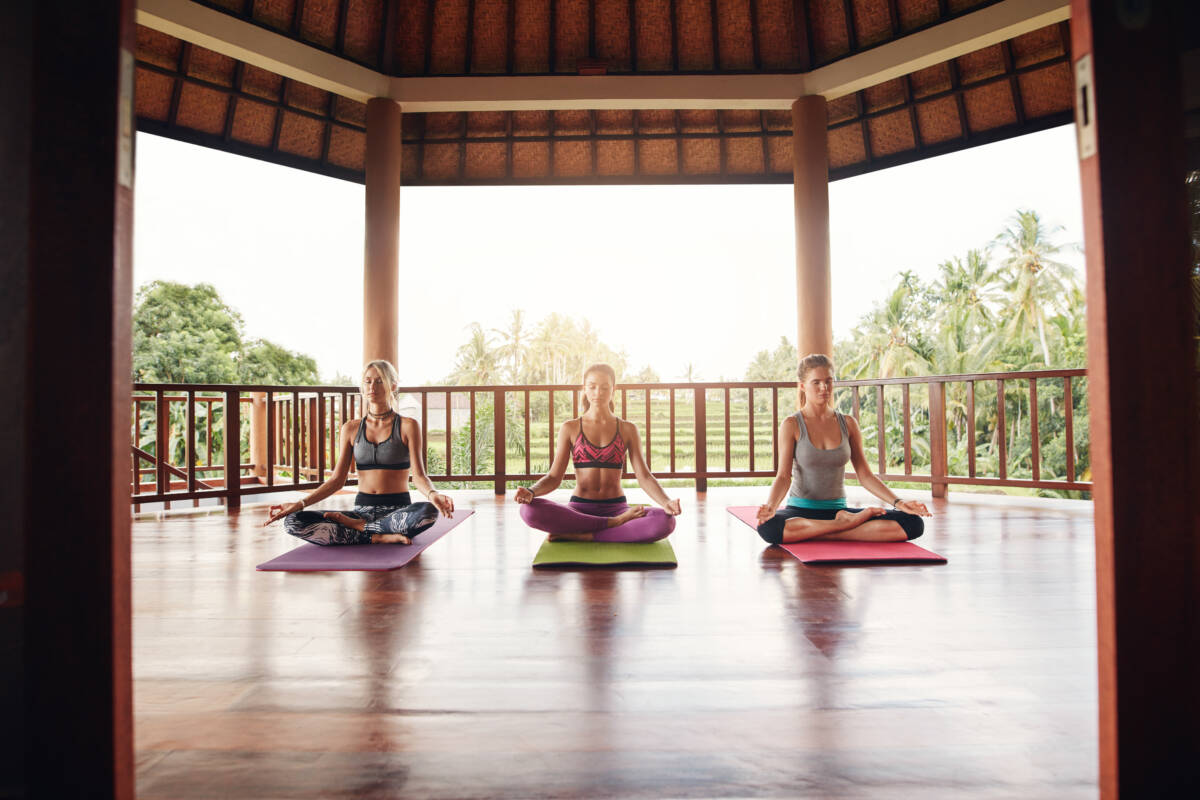
Wellness is another major part of modern Bali tourism. Ubud and Canggu in particular have yoga studios, meditation retreats, spas, and wellness resorts, while quieter parts of the island offer a more low-key way to slow down.
What Is the Best Month to Visit Bali?
There is no single perfect month for Bali. The best time depends on whether you care most about dry weather, smaller crowds, lower prices, or lush scenery.
Bali has a warm tropical climate year-round, with temperatures commonly around the low 80s °F (high 20s °C), although the highlands can feel noticeably cooler.
According to Indonesia’s official tourism guidance, Bali’s dry season generally runs from April to October, while the wetter season is usually November to March. Weather patterns are increasingly variable, so a “dry-season” trip can still include rain.
June through August usually brings some of the driest weather, but it is also a popular travel period. Shoulder months such as May, September, and October can offer a useful balance of weather and crowds.
Ceremonies and festivals take place throughout the year, and many follow Balinese calendars rather than fixed Western dates. If seeing a major celebration matters to you, check the dates shortly before booking.
How Much Money Do You Need for a Trip to Bali?
Bali can still be good value for U.S. travelers, but costs vary dramatically between local guesthouses and warungs, popular areas such as Canggu or Seminyak, and high-end resorts. Traveler-reported 2026 data from Budget Your Trip puts average daily spending at about $29 for budget travelers, $79 for mid-range travelers, and $236 for luxury travelers. Use those figures as rough planning benchmarks rather than fixed prices.
Food is one of the easiest areas to adjust your budget. Local warungs can be inexpensive, while international restaurants, specialty cafés, beach clubs, and hotel dining can quickly bring prices closer to what you would pay in the United States.
Budget separately for temple and attraction entry fees, private drivers or ride-hailing, boat transfers, diving or surfing activities, and the Bali tourist levy. Prices and exchange rates change, so keep your trip budget in Indonesian rupiah (IDR) and check current rates shortly before departure.
Tips for Planning a Trip to Bali
For U.S. travelers, the practical part of planning Bali is mostly about getting the entry steps right before you fly. The rules below reflect current information for 2026, but always recheck them close to departure.
Entry Requirements for U.S. Travelers
U.S. passport holders are currently eligible for Indonesia’s Visa on Arrival (VoA) or electronic VoA. The standard visitor visa allows a 30-day stay and costs IDR 500,000; it can be extended once for another 30 days. Your passport should be valid for at least six months from arrival, and immigration may ask for proof of onward travel. Check the official Indonesian eVisa portal and the U.S. Department of State’s Indonesia information before departure
Arrival Card and Bali Tourist Levy
Since October 2025, travelers entering Indonesia must submit the All Indonesia arrival declaration; it can be completed within three days before arrival. Bali also charges international visitors a one-time tourism levy of IDR 150,000 per person. The provincial government recommends paying through the official Love Bali portal before or during your stay.
Temple Etiquette and Everyday Practicalities
Temples are active places of worship. Dress modestly, follow local instructions, and expect to wear a sarong and sash at many sites. Some temples provide or rent them at the entrance. For food and drinking water, use the same common-sense precautions you would elsewhere in Southeast Asia: choose busy, reputable places and use bottled or properly treated water when you are unsure about the local supply.
Let Bali Surprise You
Bali is difficult to capture in a single checklist. Some of the moments you remember most may happen between the famous sights: watching the morning light fall over the rice fields, hearing music drift from a temple ceremony, stopping for lunch at a small warung, or ending the day by the ocean as the sun disappears.
Give yourself enough time to experience more than one side of the island. Bali can be energetic and social one day, peaceful and deeply rooted in tradition the next. Whether you come for the surf, the landscapes, the food, the temples, or simply a change of pace, there is always another corner of the island waiting to surprise you.
And while the best trips leave room for spontaneity, a little preparation can make it easier to enjoy those moments. If your plans include surfing, diving, volcano hikes, boat trips, or exploring neighboring islands, take a moment before you leave to check what your travel insurance covers and whether it fits the way you plan to travel.
Featured stories