Last Update: August 2026
Thimphu is Bhutan’s capital and largest city, but it does not feel like a conventional capital. Government buildings, monasteries, museums, markets, cafés, and forested hills all sit within the same valley, making it a useful place to understand how contemporary Bhutan and long-standing traditions coexist.
The city offers a unique blend of modernity and tradition. Here, modern restaurants and cafes sit side-by-side with ancient forests, historic monasteries, and traditional fortresses.
Index
Before You Visit Thimphu: Visa, SDF, and Guide Rules
For most international visitors, Bhutan requires a visa before travel. The current visa application fee is US$40, and the Sustainable Development Fee (SDF) is US$100 per adult per day, with concessionary rates for children. Check the official Bhutan visa page before booking because entry rules and fees can change.
Bhutan also requires international visitors to be accompanied by a Department of Tourism-certified guide while traveling in the country. A guide is required to enter monuments and dzongs. The official Bhutan Travel FAQs explain the current rule, and the Department of Tourism maintains a searchable list of registered guides.
Travel Tip: Thimphu is a practical first base after landing in Paro: you can visit major cultural sites, adjust to Bhutan’s mountain roads and elevation, and then continue toward Punakha or other valleys. Keep the first day relatively light if you have just arrived after a long international journey.
Is Thimphu Worth Visiting?
Yes, especially if you want more than a quick stop between Paro and Punakha. Thimphu brings together major religious sites, government architecture, museums, traditional arts, restaurants, shops, and short hikes. It is also one of the easiest places to see the contrast between Bhutanese architectural traditions and a growing modern city.
Bhutanese architecture remains highly distinctive, and modern buildings continue to follow traditional design rules. The official Bhutan Travel culture guide explains how dzongs, temples, monasteries, and contemporary buildings reflect the country’s cultural identity.
What to See in Thimphu
Buddha Dordenma
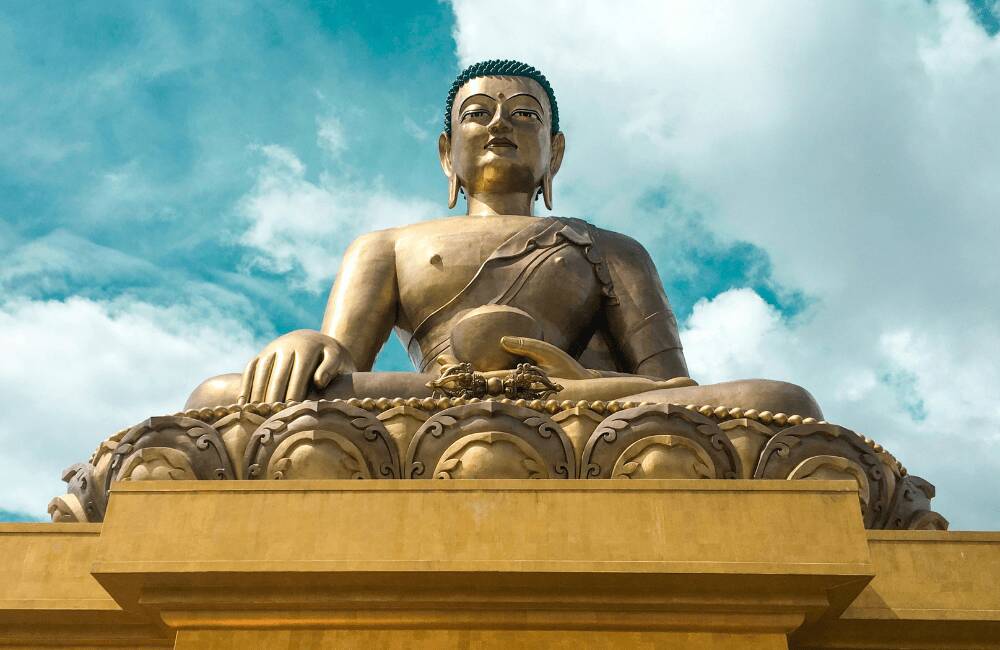
The Buddha Dordenma is one of Thimphu’s most recognizable landmarks. The seated statue stands about 169 feet tall on a hill above the valley and contains 125,000 smaller Buddha statues. Bhutan Travel describes it as one of the city’s most visited attractions. See the official Bhutan family travel feature for more context.
Go for the monument itself, but also for the broad views across the Thimphu Valley. If you want to add a walk, the Changangkha-to-Buddha Point route is a short, relatively easy hike with valley views.
Travel Tip: Do not visit only for a quick photo of the statue. Allow some extra time to walk around Kuenselphodrang and look back across the valley. It gives you a much clearer sense of Thimphu’s setting among the surrounding forested hills.
National Memorial Chorten
The National Memorial Chorten is not simply a monument for tourists. It remains an active religious site where people come to pray, turn prayer wheels, and walk clockwise around the structure.
Built in 1974, the chorten commemorates Bhutan’s third king, Jigme Dorji Wangchuck. Its location near central Thimphu makes it relatively easy to include alongside other city sights.
Visitors should follow local etiquette rather than treating the site purely as a photo stop. Bhutan’s tourism authority recommends dressing respectfully at religious sites, removing hats, maintaining silence where appropriate, and avoiding photography inside sacred spaces where it is prohibited.
Tashichho Dzong
Tashichho Dzong is both an important historic site and a functioning center of government and religion. It stands on the western bank of the Wang Chhu River and contains the throne room and offices of the King as well as parts of Bhutan’s Central Monastic Body.
The dzong was originally built in 1641 by Zhabdrung Ngawang Namgyel and has been reconstructed and expanded several times. Much of its present appearance dates from work carried out under King Jigme Dorji Wangchuck in the 1960s.
It is also the setting for the annual Thimphu Tshechu, one of the city’s major religious festivals. Festival dates vary because they follow the Bhutanese lunar calendar.
Motithang Takin Preserve
The Motithang Takin Preserve is dedicated to Bhutan’s national animal, the takin. The preserve began as part of a small zoo before being converted into a more natural, semi-wild setting.
The reserve covers roughly 8.4 hectares (21 acres) of forest and also houses animals such as sambar and barking deer. It is only a few kilometers from central Thimphu, so it can be combined with other stops in the northern part of the city.
Royal Textile Academy
Bhutan’s textile traditions are central to the country’s clothing, festivals, and visual culture. The Royal Textile Academy includes a textile museum with permanent and temporary exhibitions and also works as a training and conservation center. The official Bhutanese Art Experiences page provides an overview of the academy and Bhutanese weaving traditions.
This is one of the strongest museum stops in Thimphu if you want context for the gho and kira you will see throughout the country.
Folk Heritage Museum
The Folk Heritage Museum is built around a traditional Bhutanese house and focuses on everyday domestic life, farming tools, household objects, and rural traditions. It works well as a complement to the Royal Textile Academy because the two museums explain different parts of Bhutanese material culture.
Allow time to look beyond the main displays. The building itself, courtyard, kitchen spaces, and surrounding gardens help make the visit more tangible than a conventional gallery-style museum.
Clock Tower Square and the City Center
Not every worthwhile stop in Thimphu is a monument. Spend some time around Clock Tower Square and the central streets for cafés, shops, bookstores, handicrafts, and a more everyday view of the capital.
If you want to shop for locally made textiles and crafts, Bhutan Travel recommends places such as the CSI Market, Centenary Farmers’ Market, Textile Museum shop, Tarayana, and craft galleries.
Take a Short Hike Above Thimphu
A short hike is one of the easiest ways to see how quickly the city gives way to forested hills. Bhutan Travel lists the Changangkha-to-Buddha Point hike as an easy-to-moderate route that takes roughly 1.5 to 2 hours and offers views over the Thimphu Valley.
Longer options around the capital include hikes toward Wangditse, Tango Monastery, and sections of the Trans Bhutan Trail. Your guide can recommend a route based on weather, fitness, and the time you have available.
What Is Special in Thimphu, Bhutan?
Thimphu is not only the capital of Bhutan but alsothe most attractive city to visit in the country. It is home to many landmarks and beautiful sceneries, making it a special place for tourists. Here are some of the cultural sites that make Thimphu a special city:
- Folk Heritage Museum: With over 150 years, the Folk Heritage Museum in Thimphu is one of the oldest historic locations in the country. It is essentially a traditional Bhutanese house that takes you back to the older times of their ancestors. As such, you can see various traditional artifacts, including kitchen items and farming tools. On the exterior, you will also catch a glimpse of the traditional water mills and kitchen gardens.
- Motithang Takin Preserve: The Motithang Takin Preserve at the heart of Thimphu is home to the country’s national animal, Takin. The people of Bhutan had initially established the preserve as a mini-zoo; however, they later modified it into a preserve to provide the animals with the space they need to roam freely. Takin is a rare animal with features of both a goat and antelope, and visiting the preserve provides a perfect opportunity to enjoy the rare sight.
- Royal Botanical Garden: The Royal Botanical Garden is the first ever botanical garden in Bhutan and was established as a way to conserve the country’s rich biodiversity. It is located at the foot of Dochula Pass and plays a crucial role in environmental education and conservation. In the garden, you will find a wide range of beautiful trees and flowers. In addition, there are well-maintained walking trails and picnic spots to sit and relax as well.
- Tashichho Dzong: If you are interested in the history of Bhutan’s governance, you can’t fail to visit Tashichho Dzong. The fortress was established in the 1640s by one of the most iconic figures in the history of the country, Zhabdrung Ngawang. Ngawang is widely considered the unifier of Bhutan because he introduced a system of governance that combines both spiritual and temporal authority. The system is still used to date. Tashichho Dzong has been the seat of the country’s government since the mid-20th century.
- Wang Chhu: is one of the biggest rivers flowing across Thimphu. It has always been an integral part of agriculture. Today, it plays an important role in Thimphu’s beautiful landscape. There are plenty of activities along the river banks, including scenic walks, cycling, fishing, and picnicking.
Thimphu or Paro: Which Should You Visit?
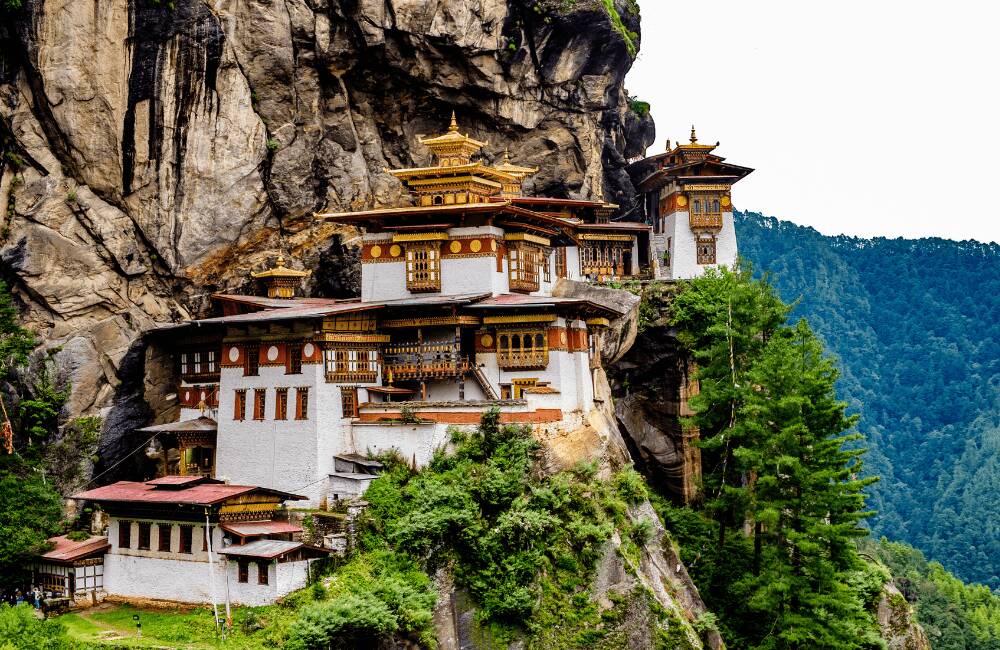
The better question is usually not Thimphu or Paro, but how much time to give each. Paro is the arrival point for most international visitors and is the base for Bhutan’s most famous hike, Paro Taktsang, or Tiger’s Nest. Thimphu offers a denser mix of museums, government landmarks, restaurants, markets, and contemporary urban life.
Bhutan currently has one international airport, in Paro, plus domestic airports in other parts of the country. The official Bhutan Travel transport information is the best place to verify current flight and arrival information.
For a first trip, visiting both cities makes more sense than choosing one. A typical western Bhutan itinerary can use Paro for Tiger’s Nest and arrival or departure days, then Thimphu for one or two full days of sightseeing before continuing to Punakha.
How Many Days Do You Need in Thimphu?
One full day is enough to cover the headline sights, but two days gives the city more room to breathe. With a second day, you can add a short hike, spend longer in the museums, visit markets or shops, and avoid turning every cultural site into a brief photo stop.
If Thimphu is your first stop in Bhutan, the slower pace can also make the transition into the trip easier before longer drives into the mountains and valleys.
Plan Your Time in Thimphu Around Culture and Pace
Thimphu is most rewarding when you mix major landmarks with ordinary city life. See Buddha Dordenma and Tashichho Dzong, but also leave space for a museum, a café, a short walk, and time to observe how the capital functions beyond its postcard sights. That balance gives a much clearer introduction to Bhutan than racing through a checklist of attractions.
Featured stories