Last Update: August 2026
Brazil is the kind of country that can feel like several trips in one. You can spend a morning beneath Rio de Janeiro’s most famous landmarks, walk through a landscape of white dunes and rain-fed lagoons in Maranhão, or head deep into the Amazon for a completely different side of the country.
This guide focuses on the places and experiences that are most worth building a first Brazil itinerary around, from Christ the Redeemer and Iguazu Falls to Brasília’s modernist architecture, Lençóis Maranhenses, Brazilian Carnival, capoeira, coffee, and caipirinhas.
As of 2026, U.S. passport holders need a visa or e-Visa before traveling to Brazil. Check the U.S. Department of State and the Brazilian Ministry of Foreign Affairs before your trip, since entry rules can change.
Index
What Is the No. 1 Tourist Attraction in Brazil?
Brazil is home to many incredible sights, but one attraction stands out above the rest: the majestic Christ the Redeemer statue. Completed in 1931, the Art Deco statue stands on Corcovado Mountain inside Tijuca National Park. The statue itself is about 98 feet tall, with arms stretching about 92 feet; including the pedestal, the monument reaches roughly 125 feet.
You can reach Corcovado by the historic train or official van services, and elevators and escalators make the final approach easier. At the base of the monument, don’t miss the small Chapel of Our Lady of Aparecida, dedicated to Brazil’s patron saint. It is easy to overlook when most visitors are focused on the viewpoint above Rio.
Travel Tip: f the view matters as much as the statue, aim for an early time slot on a clear morning. Low clouds can completely hide Corcovado, so check current conditions before you go.

What to See in Brazil
Brazil’s size means the best itinerary depends on what you want from the trip. These stops cover nature, cities, architecture, beaches, and a few experiences that are difficult to find anywhere else.
Amazon Rainforest
For many travelers, Manaus is the most practical gateway to the Brazilian Amazon. From there, river cruises and forest lodges take you beyond the city into flooded forests, tributaries, wildlife habitats, and riverside communities. The experience changes with the water cycle, so there is no single ‘best’ Amazon season – higher water and lower water reveal different landscapes and wildlife.
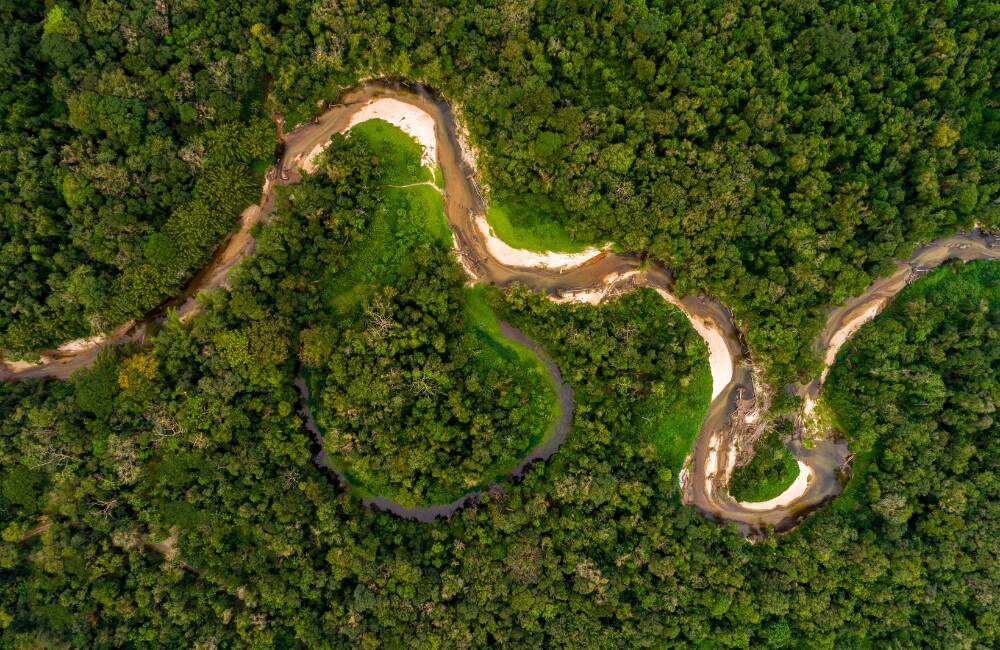
Travel Tip: Build in time for the Meeting of the Waters near Manaus. The dark Rio Negro and the lighter Solimões flow alongside each other without immediately mixing, creating one of the Amazon’s most distinctive natural sights. It is much more memorable than treating Manaus only as an airport stop.
Beaches in Rio de Janeiro
Rio’s beaches are part of everyday city life, not just sightseeing stops. Copacabana and Ipanema are the obvious names for a first visit, but they offer different experiences, and choosing the right stretch of sand can change the feel of your day.
Pick the Beach by Mood:
- Copacabana: Best for the classic Rio waterfront, a busy promenade, beach sports, and a lively atmosphere.
- Ipanema: A better fit if you want beach time followed by cafes, restaurants, and sunset views near Arpoador.
- Barra da Tijuca: A longer, more spread-out beach that can feel less compressed than Rio’s best-known South Zone beaches.
Iguazu Falls
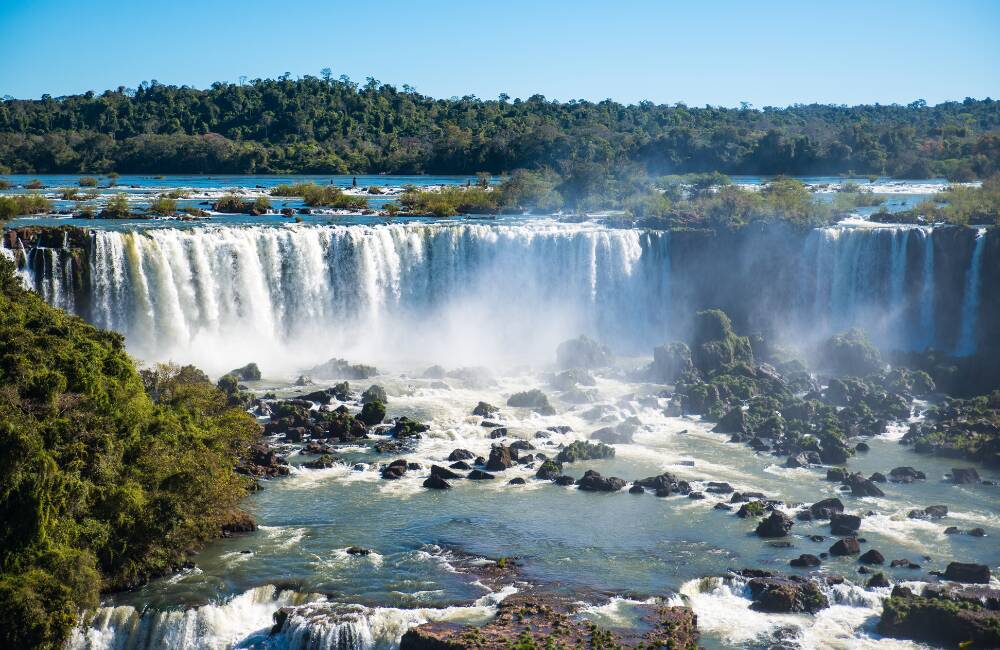
Iguazu Falls sits on the Brazil-Argentina border inside two neighboring national parks. The waterfall system stretches for nearly 1.9 miles and drops up to about 260 feet, with numerous cascades cutting through subtropical forest. Brazil’s Iguaçu National Park has been a UNESCO World Heritage Site since 1986 and protects far more than the falls, including habitat for species such as jaguars, giant anteaters, and howler monkeys.
The Brazilian side is especially good for the wide panoramic view of the waterfall system. Expect heavy spray near the main walkways – a lightweight rain layer and shoes with reliable grip are more useful than dressing for a dry sightseeing stop.
Travel Tip: Start on the Brazilian side for the sweeping panoramic shot that puts the entire falls in perspective, then head to the Argentine side for the immersive, up-close walk right above and inside the mist. Visiting Brazil first gives you the “big picture” before you get soaked in the action!
Architecture in Brasília
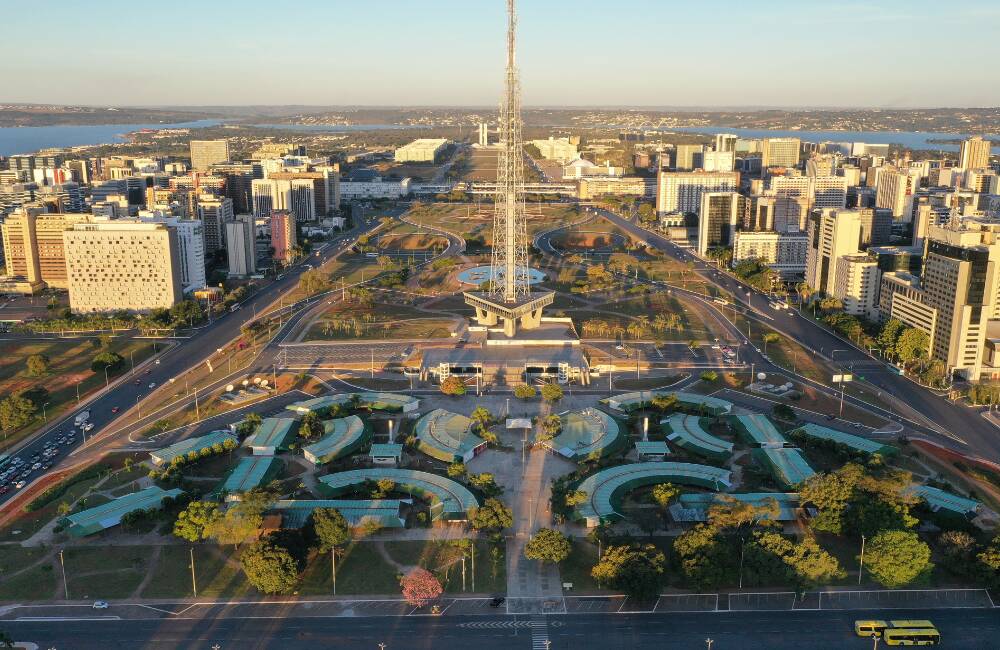
Brasília is one of the rare capitals built as a modernist project from the ground up. Urban planner Lúcio Costa created the city’s master plan, while architect Oscar Niemeyer designed many of its defining civic buildings. Their work helped earn Brasília UNESCO World Heritage status in 1987.
Three Places to Put on Your Architecture Route:
- Cathedral of Brasília: One of Niemeyer’s most recognizable designs, with 16 sweeping concrete columns.
- National Congress: A landmark composition of twin towers, a dome, and an inverted dome along the Monumental Axis.
- Three Powers Plaza: A useful place to understand how architecture, government, and the city’s monumental scale fit together.
Travel Tip: Brasília looks compact on a map, but its major landmarks are spread across long monumental axes. A guided tour, taxi, or ride-share is usually more practical than trying to connect everything on foot.
Lençóis Maranhenses National Park
Lençóis Maranhenses National Park joined the UNESCO World Heritage List in 2024. Its roughly 600-square-mile landscape is dominated by sweeping white dunes, some approaching 100 feet high, with rain-fed freshwater lagoons forming between them.
The park is open year-round, but the famous lagoon-filled scenery is seasonal. Lagoons are usually at their fullest from June through September, after months of rain, although water levels vary from year to year.
Choose Your Base Carefully:
- Barreirinhas: The easiest all-around base, with the widest range of hotels, restaurants, and organized tours.
- Santo Amaro: A strong choice if your priority is getting closer to large lagoon systems and spending more time inside the park rather than commuting to it.
Sugarloaf Mountain
Sugarloaf Mountain is the other classic high viewpoint in Rio, but the journey is part of the attraction. The official cable car runs in two stages: from Praia Vermelha to Morro da Urca, then from Morro da Urca to Sugarloaf Mountain, which rises about 1,300 feet above sea level.
Do not rush through the middle station. Morro da Urca has its own viewpoints and exhibits, and stopping there gives you a different angle on Guanabara Bay before the final ascent. The cable car opened in 1912, making it Brazil’s first and one of Rio’s longest-running tourism icons.
What Is Brazil Known For?
Brazil’s identity cannot be reduced to one city or one landmark. These five cultural touchpoints help explain why the country feels so distinctive to visitors.
Carnival Celebrations
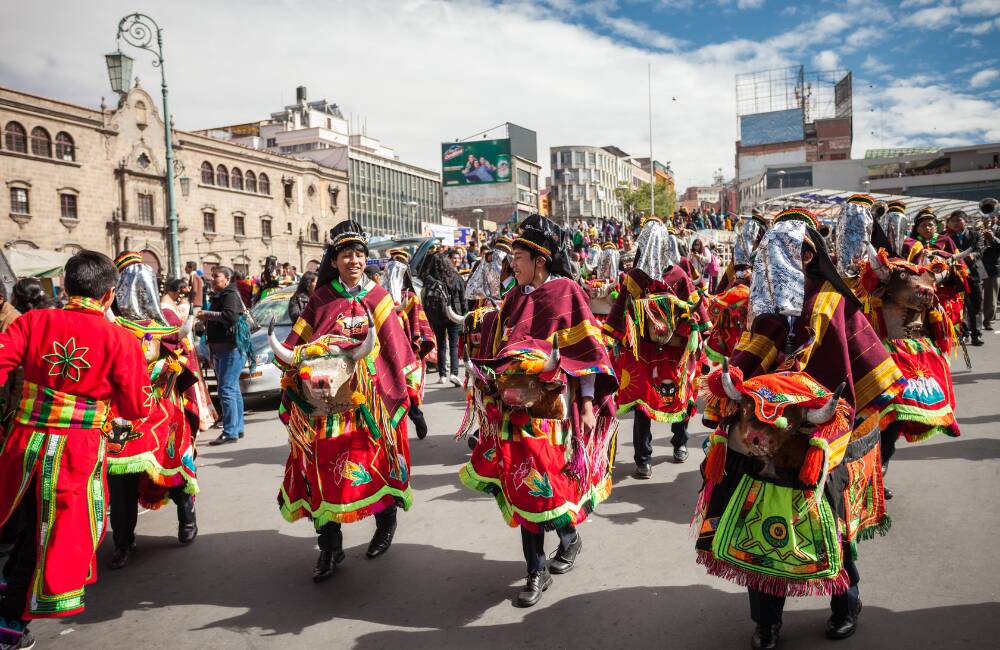
The Carnival is perhaps the most famous celebration in Brazil. People travel from all over the world during the final week leading to Ash Wednesday just to witness the magnificent culture. According to history books, the Brazilians held the first Carnival in Rio de Janeiro in 1723 and haven’t looked back since then. Today, it is performed annually without fail. But what is the Carnival?
For travelers, Rio Carnival has two very different sides: the formal samba school parades at the Sambadrome and the street blocos that spread across neighborhoods. Some samba schools do allow visitors to parade after buying the correct costume and registering, but participation rules vary by school and year, so it is not as simple as buying any costume and turning up.
Soccer (Football)
In Brazil, soccer is futebol, and it is woven into daily life as much as national identity. Brazil remains the most successful team in men’s FIFA World Cup history, with five titles: 1958, 1962, 1970, 1994, and 2002. Pelé, Ronaldo, Ronaldinho, Marta, and generations of other players have helped make Brazilian soccer instantly recognizable around the world.
If you are in Rio or São Paulo during the club season, seeing a match can add something very different to a sightseeing-heavy itinerary. Fixtures and ticket rules change, so check the club or stadium’s official channels rather than relying on third-party schedules.
Capoeira
Capoeira is an Afro-Brazilian cultural practice that blends fight, dance, music, ritual, and play. It developed within communities shaped by slavery and resistance, but describing it simply as ‘self-defense disguised as dance’ misses much of its history and cultural meaning.
A traditional roda forms a circle around two players while others sing, clap, and play instruments, especially the berimbau. UNESCO added the Capoeira Circle to the Representative List of the Intangible Cultural Heritage of Humanity in 2014, recognizing both the practice and the way its knowledge is passed from masters to students.
Coffee Culture
Brazil remains the world’s largest coffee producer and exporter, and the crop is much more than an export statistic. In 2026, Brazilian government data continued to place the country at the top of global production and exports. Minas Gerais is the best-known producing state, with important growing regions also found in Espírito Santo, São Paulo, Bahia, and elsewhere.
In cities, look beyond the default espresso and try coffee from a shop that identifies the producing region or farm. It is an easy way to connect a familiar Brazilian product with the geography and agricultural traditions behind it.
Caipirinhas
Caipirinha is Brazil’s best-known cocktail, built around cachaça, fresh lime, and sugar. Cachaça is a distinct Brazilian sugarcane spirit rather than simply ‘Brazilian rum,’ and Brazilian law specifically defines caipirinha as a drink made with cachaça, lime, and sugar.
For a Simple Classic Caipirinha:
- Cut 1 lime into small wedges and muddle it gently with about 2 teaspoons of granulated sugar.
- Add about 2 ounces of cachaça and plenty of ice.
- Stir well and adjust the sugar to taste rather than turning it into a sweet mixed drink.
Where Should I Go the First Time I Visit Brazil?
As we’ve already seen, Brazil is home to plenty of attractions located in different states across the country. So, the choice of where to visit first depends heavily on what you want to see first. Here is a quick breakdown to give you a better idea:
Brasília
Best for: architecture, urban design, and a short city break focused on modern Brazil. Brasília is worth prioritizing if Niemeyer and modernist planning genuinely interest you; otherwise, it is less obvious as a first stop than Rio or São Paulo. If you are arriving elsewhere in Brazil, a domestic flight is usually far more practical than an overnight bus.
São Paulo
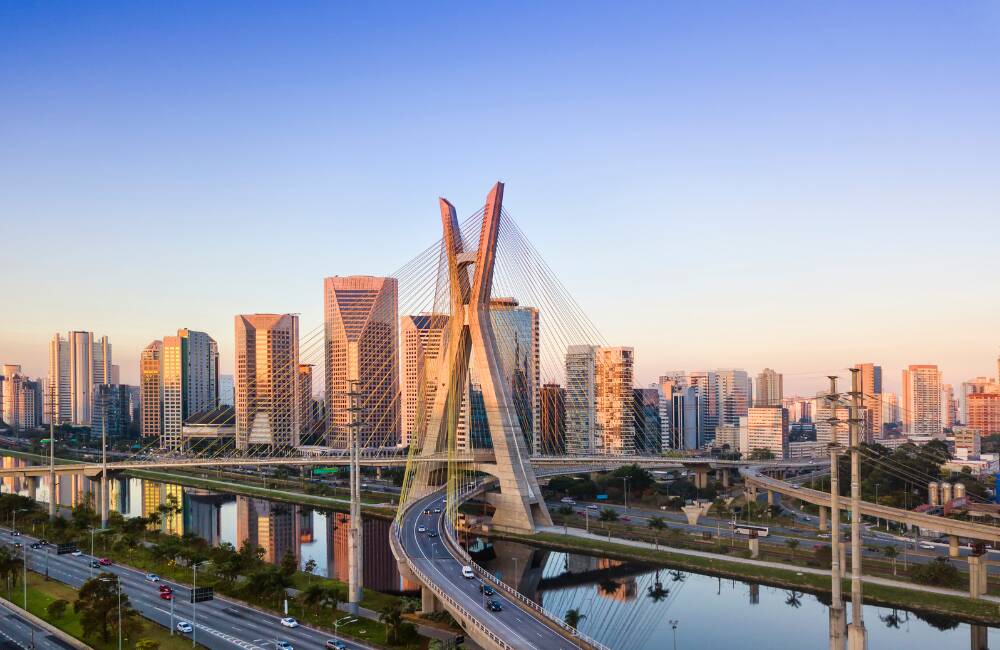
Best for: food, museums, galleries, nightlife, and a big-city introduction to contemporary Brazil. São Paulo is one of the country’s main international gateways, but its appeal is not about postcard scenery. Give it time for neighborhoods, restaurants, museums, and street art rather than treating it only as a connection point.
Rio de Janeiro
Best for: a first trip that combines Brazil’s most recognizable sights with beaches, city life, and easy-to-plan day excursions. If you only have one Brazilian city on your itinerary, Rio gives you the densest mix of landmarks and outdoor scenery.
Plan at least a few days if you want Christ the Redeemer, Sugarloaf, Copacabana or Ipanema, and time away from the headline attractions. Trying to squeeze Rio into a single day usually means spending more time in transit and lines than actually experiencing the city.
Florianópolis
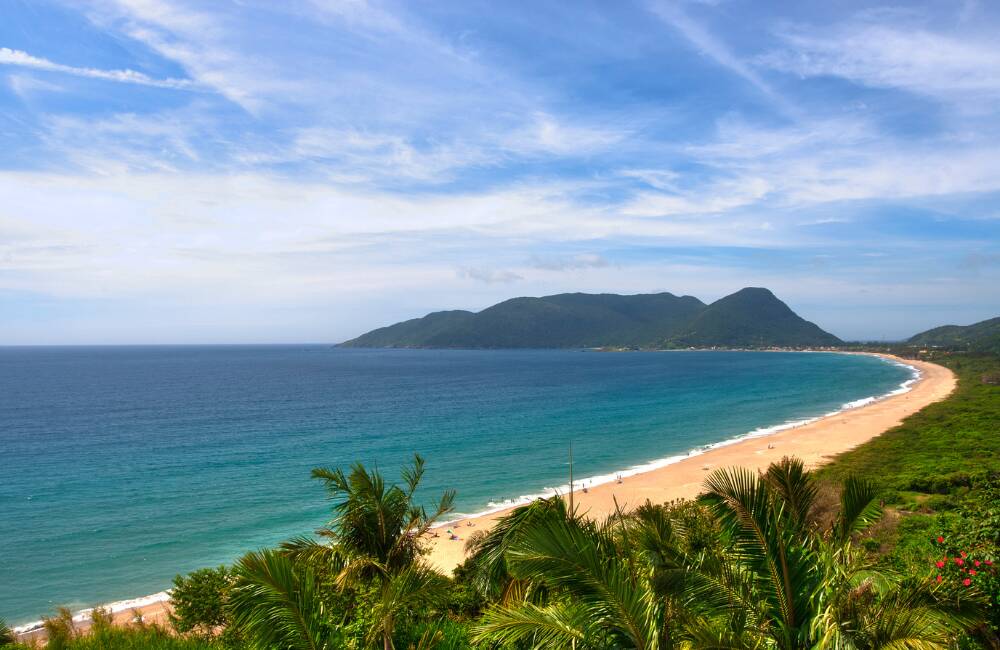
Best for: beaches, surfing, hiking, and a slower coastal trip in southern Brazil. Florianópolis is centered on Santa Catarina Island and gives you a very different experience from Rio, with places such as Joaquina, Praia Mole, and Lagoa da Conceição spread across the island. It works particularly well if outdoor time matters more to you than big-city sightseeing.
Planning Your Trip to Brazil
Brazil rewards travelers who resist the urge to see everything at once. A first trip might pair Rio with Iguazu Falls, combine São Paulo with the coast, or use Manaus as the gateway to the Amazon. If Lençóis Maranhenses or Brasília is a priority, build the itinerary around that experience instead of adding it as an exhausting detour.
When you’re exploring a country as vast as Brazil, the last thing you want is an unexpected problem to take over your trip. Heymondo travel insurance can help you feel prepared for the unexpected, leaving you to focus on the beaches, cities, landscapes, and experiences ahead.
Featured stories