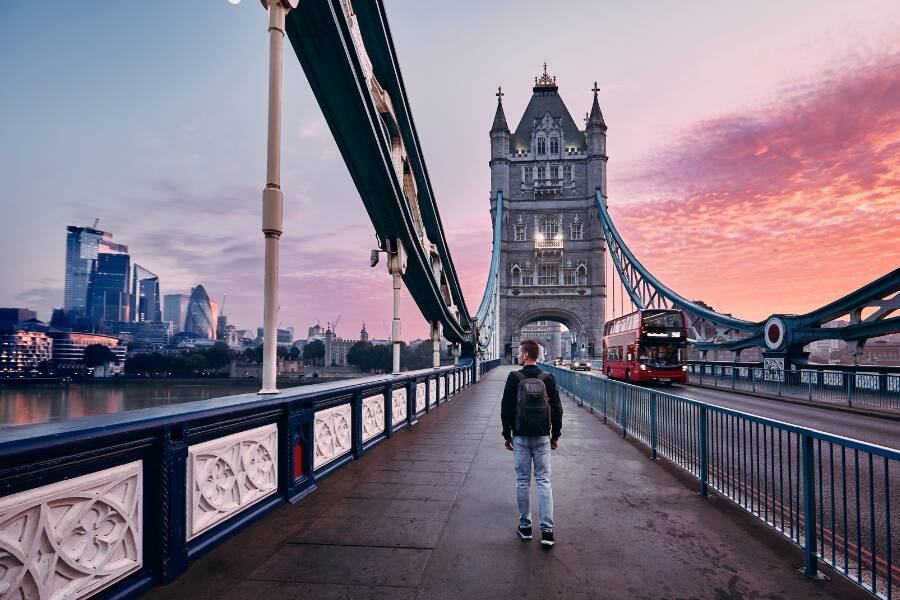
Riding the rails between January and March shows you a quieter side of Europe than the December holiday rush. Once the Christmas markets pack up, station crowds thin out and mid-winter ticket prices drop. High-altitude passes also hold their deepest, most reliable snowpack of the year. For travelers planning the best winter train journeys in Europe, late winter turns transit days into the highlight of the trip.
Flying from the US requires different planning than hopping on a train as a local. Below, each route includes winter timetable details, seat reservation timelines, and the easiest international airport hub to fly into before you board.
| Route | Country | Duration | Best Month to Go |
| The Glacier Express | Switzerland | ~8 hours | February |
| The Bernina Express | Switzerland to Italy | ~4 hours | January |
| The Bergen & Flåm Railway | Norway | ~7.5 hours | February |
| The West Highland Line | Scotland | ~5.5 hours | March |
| The Arctic Circle Train | Sweden to Norway | ~18.5 hours | February |
| The Semmering Railway | Austria | ~2.5 hours | January |
Index
1. The Glacier Express (Switzerland)
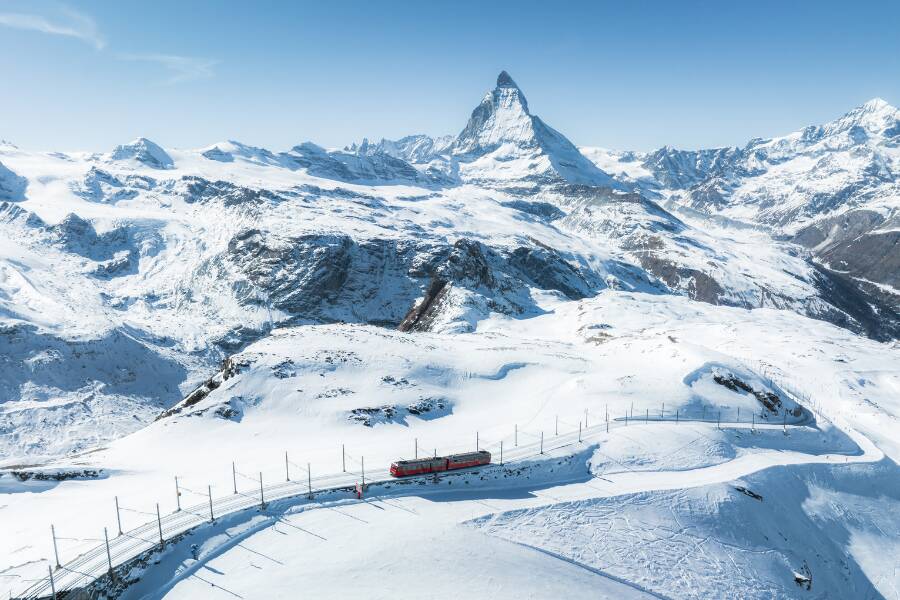
Often called the slowest express train in the world, the Glacier Express crosses 291 bridges and passes through 91 tunnels between Zermatt and St. Moritz. In winter, floor-to-ceiling panoramic windows frame frozen alpine rivers, snow-covered chalets, and the sweeping curve of the Landwasser Viaduct, all without summer tour bus crowds.
Service pauses every autumn for track maintenance. According to the official Glacier Express timetable, the winter season runs from December 5, 2026, through May 2, 2027. Seat reservations are mandatory year-round and cost CHF 54 (roughly $60 USD) on top of your rail ticket. Book up to 90 days ahead for February trips, when longer daylight hours light up the 6,670-foot Oberalp Pass.
Logistical Tip: To reach either end of the line from the US, fly into Zurich Airport (ZRH). From the underground airport station, Swiss Federal Railways (SBB) trains reach Zermatt or St. Moritz in about 3.5 hours with one easy platform transfer. Aim for a window table in the dining car if you reserve early.
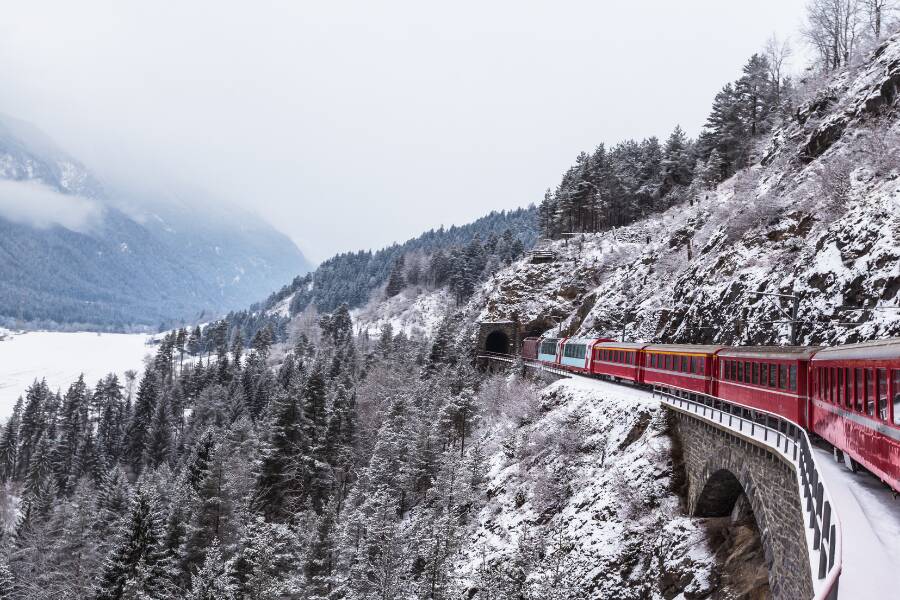
2. The Bernina Express (Switzerland to Italy)
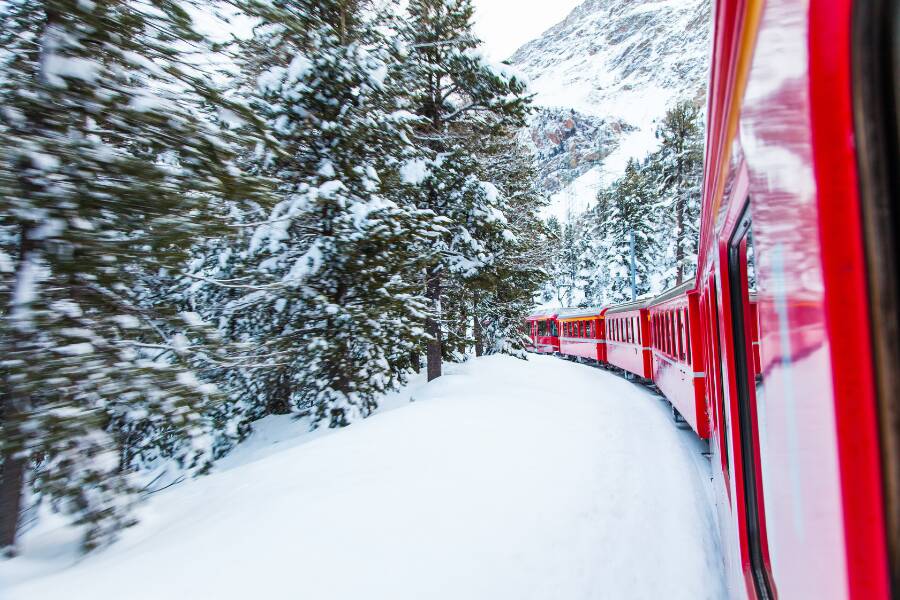
Few winter train rides pack such a sharp climate shift into a single afternoon. Starting in Chur or St. Moritz, the red Rhaetian Railway carriages climb past the Morteratsch Glacier to Ospizio Bernina at 7,391 feet, the highest rail crossing in the Alps. From there, the train spirals down the Brusio viaduct into palm-lined Tirano, Italy.
During the winter timetable (December 13, 2026, through April 23, 2027), panoramic service on the full Chur–Tirano route drops to one train per day in each direction, per the Rhaetian Railway schedule. Panoramic seat reservations are required and sell out weeks in advance. If they are full, hop on the hourly Swiss regional trains that run along the exact same UNESCO-listed tracks. They require no seat reservations, and their pull-down windows eliminate glass glare for winter photos.
For US travelers; Milan Malpensa Airport (MXP) is the closest hub to the southern terminus in Tirano, located about three hours away by regional train via Milan Centrale. Zurich Airport serves the northern Chur starting point.
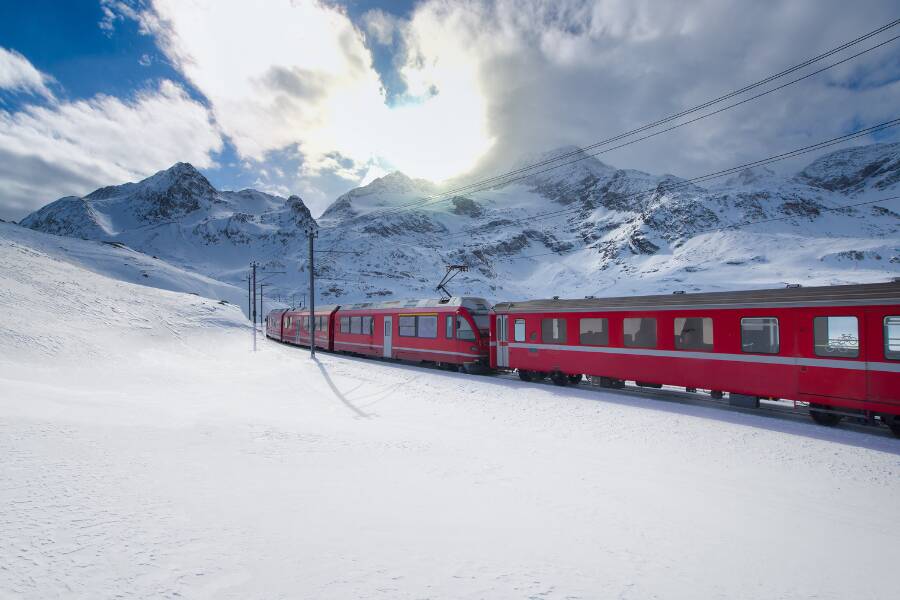
3. The Bergen & Flåm Railway (Norway)
Pairing Norway’s main Bergen Line with the steep Flåm Railway branch creates one of Scandinavia’s best winter rail trips. You leave Oslo in the blue pre-dawn light and climb across Hardangervidda, Europe’s highest mountain plateau, where snowdrifts often reach the carriage windows. At Myrdal, you transfer to descend 2,835 feet into the frozen Aurlandsfjord.
Operated year-round by Vy and the Flåmsbana, the winter schedule offers about four daily connections. January brings only six hours of daylight, so February or March gives you crisp snow plus enough afternoon light to add a winter fjord cruise from Flåm to Gudvangen. Sit on the left side going down from Myrdal to Flåm for views directly above the frozen Kjosfossen waterfall and the sharpest drops into the valley.
Logistical Tip: Fly into Oslo Gardermoen Airport (OSL), which sits 20 minutes from Oslo Central Station on the Airport Express train. Because coastal storms often hit the Myrdal mountain transfer, book both legs on a single through-ticket. That way, if heavy snow delays your morning train, the operator automatically protects your onward fjord descent.
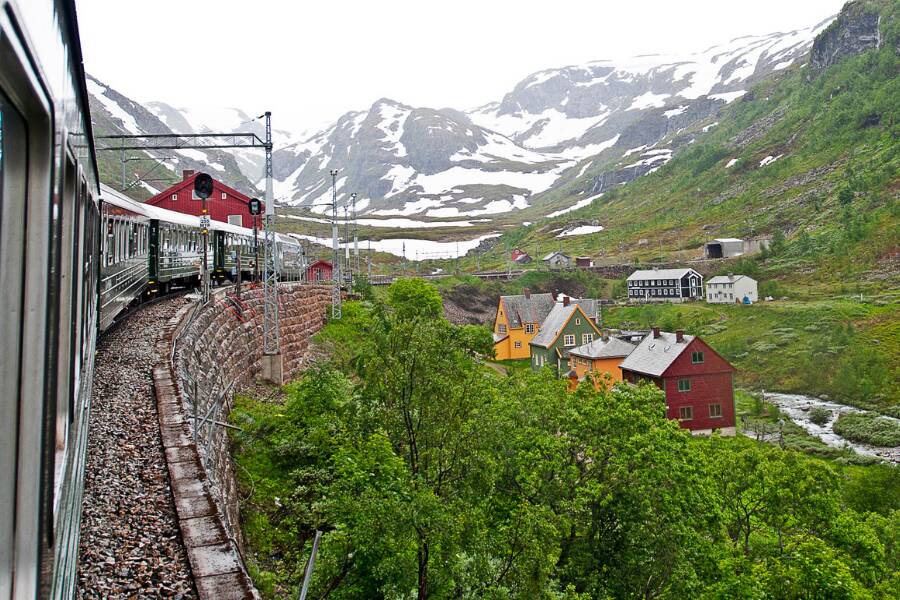
4. The West Highland Line (Scotland)
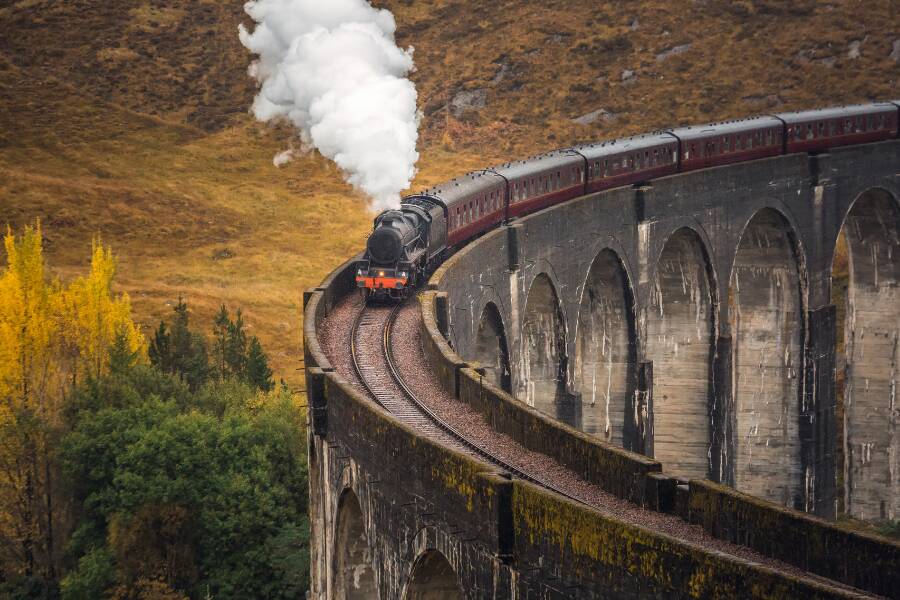
Scotland’s West Highland Line proves you do not need alpine peaks for memorable winter scenery. Heading north from Glasgow Queen Street toward Fort William and the fishing port of Mallaig, the train crosses the snowy expanse of Rannoch Moor, where the tracks rest on a floating mattress of tree roots and brushwood. Farther north, the line curves across the 21-arch Glenfinnan Viaduct.
Winter rail travel here peaks in late February and March. Snow still caps Ben Nevis, while longer days let you catch coastal views past Loch Eilt. ScotRail runs three to four daily trains year-round without mandatory seat reservations. Booking 8 to 12 weeks ahead drops fares to roughly $25–$40 each way. For the best angle of the Glenfinnan Viaduct curve and Loch Shiel, sit on the left side of the carriage heading north from Fort William to Mallaig.
Logistocal Tip: Glasgow Airport (GLA) is the nearest international hub, located a 15-minute shuttle ride from Glasgow Queen Street station. If you are coming from London, you can also ride the overnight Caledonian Sleeper straight into Fort William.
5. The Arctic Circle Train (Sweden to Norway)
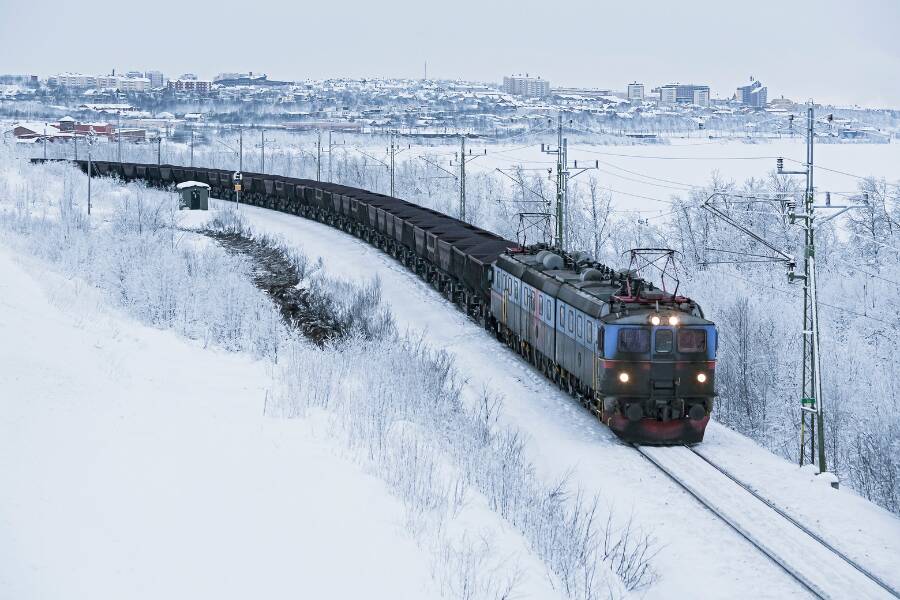
Many travel guides mistakenly recommend Sweden’s Inlandsbanan for winter trips, even though its northern Lapland stretch only runs in summer. For a true winter Arctic journey, book the SJ Arctic Circle Night Train from Stockholm Central to Narvik, Norway. The train crosses the Arctic Circle overnight and winds past Abisko National Park’s frozen lakes and snow-heavy birch forests.
Following track upgrades, direct overnight service without a daytime transfer in Boden resumed on December 13, 2026, with one daily departure each way, according to Swedish Lapland’s official rail update. Because only one train runs per day, 1st-class private cabins and 2nd-class sleeping compartments sell out fast on the SJ booking portal, especially for February’s prime Northern Lights window.
Logistocal Tip: Fly into Stockholm Arlanda Airport (ARN), which features a rail station directly beneath Terminal 5. You can step off a transatlantic flight and board northbound SJ trains without transferring through downtown Stockholm.
6. The Semmering Railway (Austria)
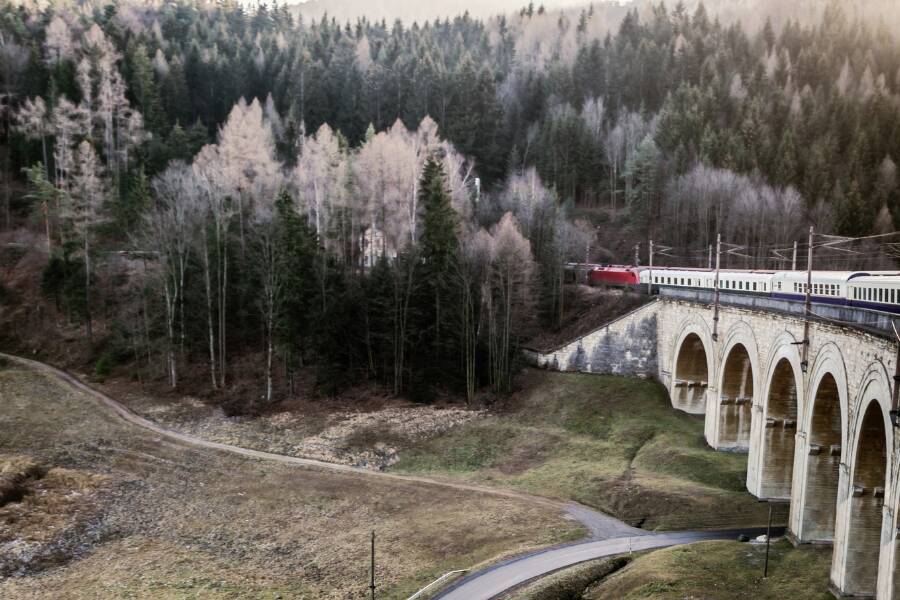
Built in 1854 as the world’s first standard-gauge mountain railway, Austria’s UNESCO-listed Semmering Railway links Vienna and Graz across 16 stone viaducts and 15 tunnels. In January, frost coats the Styrian pine forests as red Railjet trains glide over the two-tiered Kalte Rinne Viaduct toward snow-covered peaks.
Unlike seasonal tourist expresses, the Semmering line is a busy commuter and intercity corridor run by ÖBB Austrian Federal Railways. Trains depart roughly every hour year-round. Construction continues on the Semmering Base Tunnel, not slated to open to passengers until at least 2030, so all 2027 trains still cross the historic mountain viaducts. Advance Sparschiene tickets start around $15–$25. Sit on the left side when traveling south from Vienna to Graz for the best views between Gloggnitz and Mürzzuschlag.
Logistical Tip: Vienna International Airport (VIE) sits 15 minutes by direct Railjet train from Wien Hauptbahnhof, making this route easy to add to a short winter city break.
Essential Tips for Winter Train Travel in Europe
Planning a European rail trip in winter takes a different approach than summer train-hopping, especially when pairing transatlantic flights with mountain routes:
- Build buffer time into mountain transfers: Winter snowstorms in the Alps and Scandinavia rarely shut down rail networks completely, since operators run specialized snow-clearing locomotives. However, 30- to 90-minute weather delays are common. Avoid tight 15-minute connections between an international flight and a once-daily panoramic train.
- Keep official delay proof from the rail carrier: If a severe winter storm delays your flight or long-distance train by two hours or more and causes you to miss an onward connection, ask station staff or the conductor for a written delay certificate right away. International travel insurance with missed-connection coverage helps reimburse extra hotel nights and replacement tickets once you submit the official documents.
- Pack soft-sided luggage for overhead racks: Panoramic coaches like the Glacier Express and sleepers on the SJ Arctic Circle Train have narrow luggage towers and slim overhead racks. A 22-inch soft duffel or carry-on suitcase fits far easier than an oversized hard-shell trunk.
Frequently Asked Questions
Is January a Good Time to Ride the Glacier Express?
Yes. Following its autumn maintenance closure (October 11 to December 4, 2026), the Glacier Express runs its full winter schedule throughout January. You get guaranteed snow across the Oberalp Pass and far smaller crowds than in late December. Daylight fades around 4:45 PM, so book the morning departure to see the whole route in full light.
Do I Need to Book Winter Train Seats in Advance in Europe?
It depends on the train. Dedicated panoramic and overnight routes, including the Glacier Express, Bernina Express, and SJ Arctic Circle Night Train, require seat or sleeper reservations that sell out weeks or months ahead. Regional and intercity lines like Scotland’s West Highland Line and Austria’s Semmering Railway do not require reservations, though buying advance tickets online saves up to 50% over station fares.
What Happens if Heavy Snow Delays My European Train and I Miss a Connection?
If you bought both legs on a single through-ticket, such as a combined Vy ticket from Oslo to Flåm, the rail operator should put you on the next available train at no extra cost. If you booked separate tickets, like a flight into Zurich followed by an independent Glacier Express reservation, request written proof of the delay from the carrier. You can use that document to claim reimbursement for extra meals, hotels, or rebooking fees.
What Should I Pack for a European Winter Train Trip?
Dress in breathable layers rather than one heavy sweater. European train carriages stay heated to around 68°F–72°F, while open-air viewing platforms and rural station platforms can drop below 15°F. Pack a lightweight merino base layer, a warm mid-layer, and a windproof outer shell you can easily stow overhead. Add insulated waterproof boots with solid grip for icy platforms, plus a polarizing filter or microfiber cloth to cut window glare when photographing snowy landscapes.
Protect Yourself Against the Unexpected
When you connect transatlantic flights, mountain transfers, and once-daily panoramic trains across snowy terrain, one winter storm can disrupt your whole schedule. Traveling with Heymondo gives you 24/7 assistance through our app and by phone. Whether you need help rebooking missed connections after a weather delay or finding an English-speaking clinic in an alpine town, our team is ready to support you. Explore our travel insurance options before you depart so you can settle into your window seat and enjoy the snowy views ahead.
Featured stories